


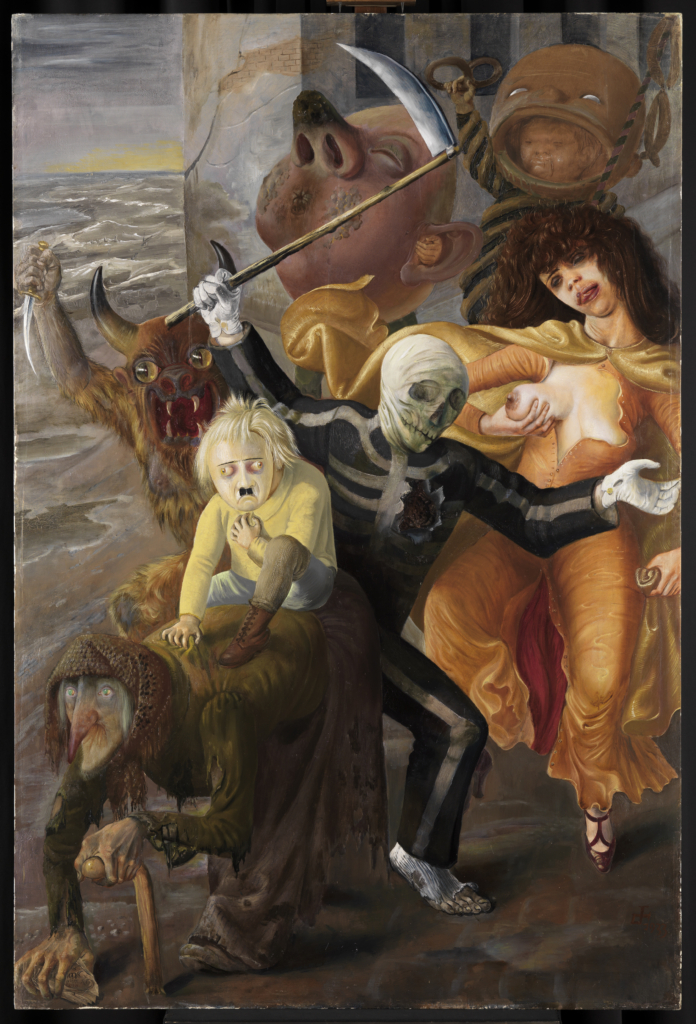
The Seven Deadly Sins
Otto Dix
Highlights
0:00
0:00
Disaster is approaching!
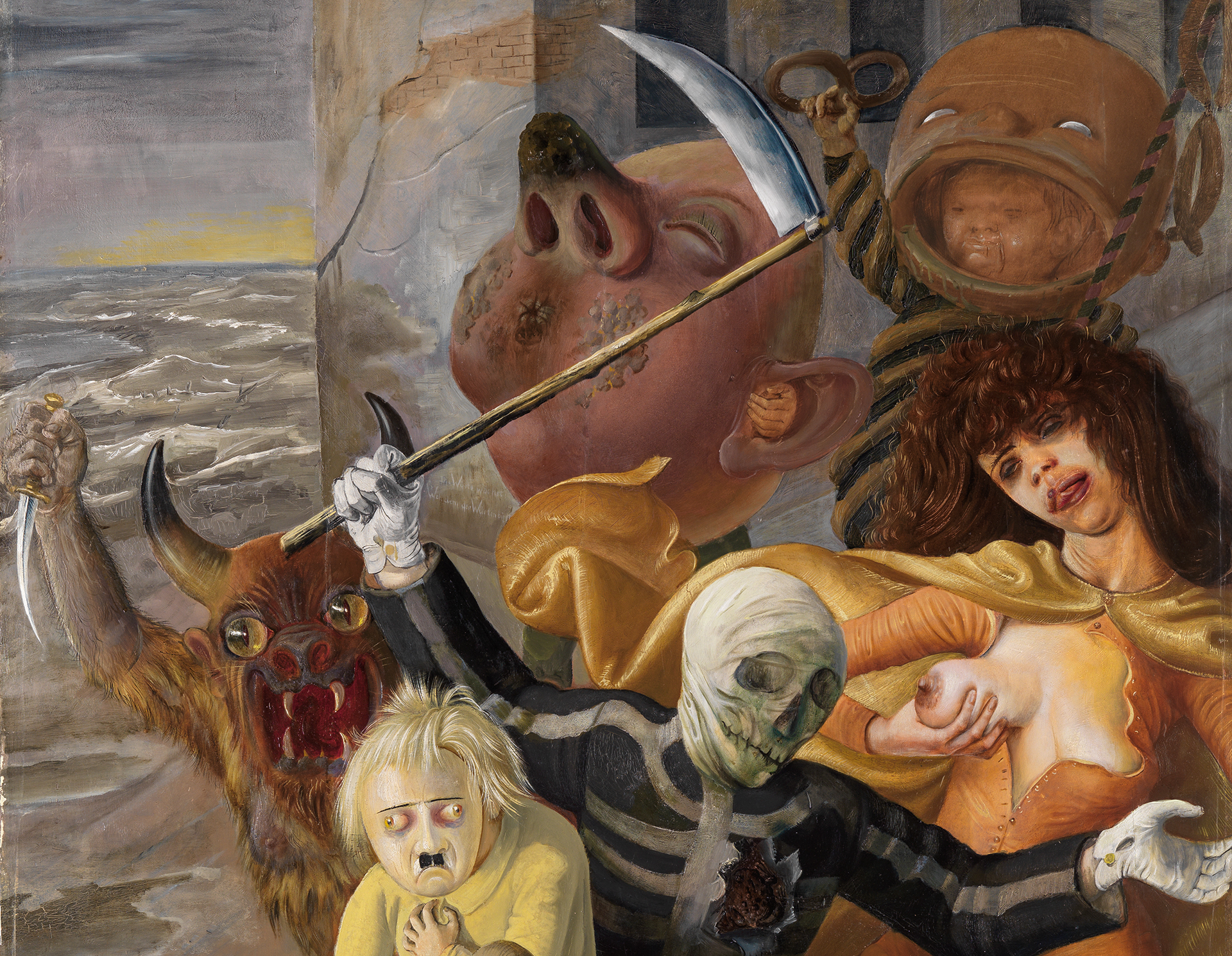
What a horrific scene: a grey sea whips at ruined walls in the background. In the foreground, a bizarre train pushes towards us inexorably. It is a carnival, a dance of death. Otto Dix painted the seven deadly sins in 1933. The year the National Socialists seized power.
In the face of horror
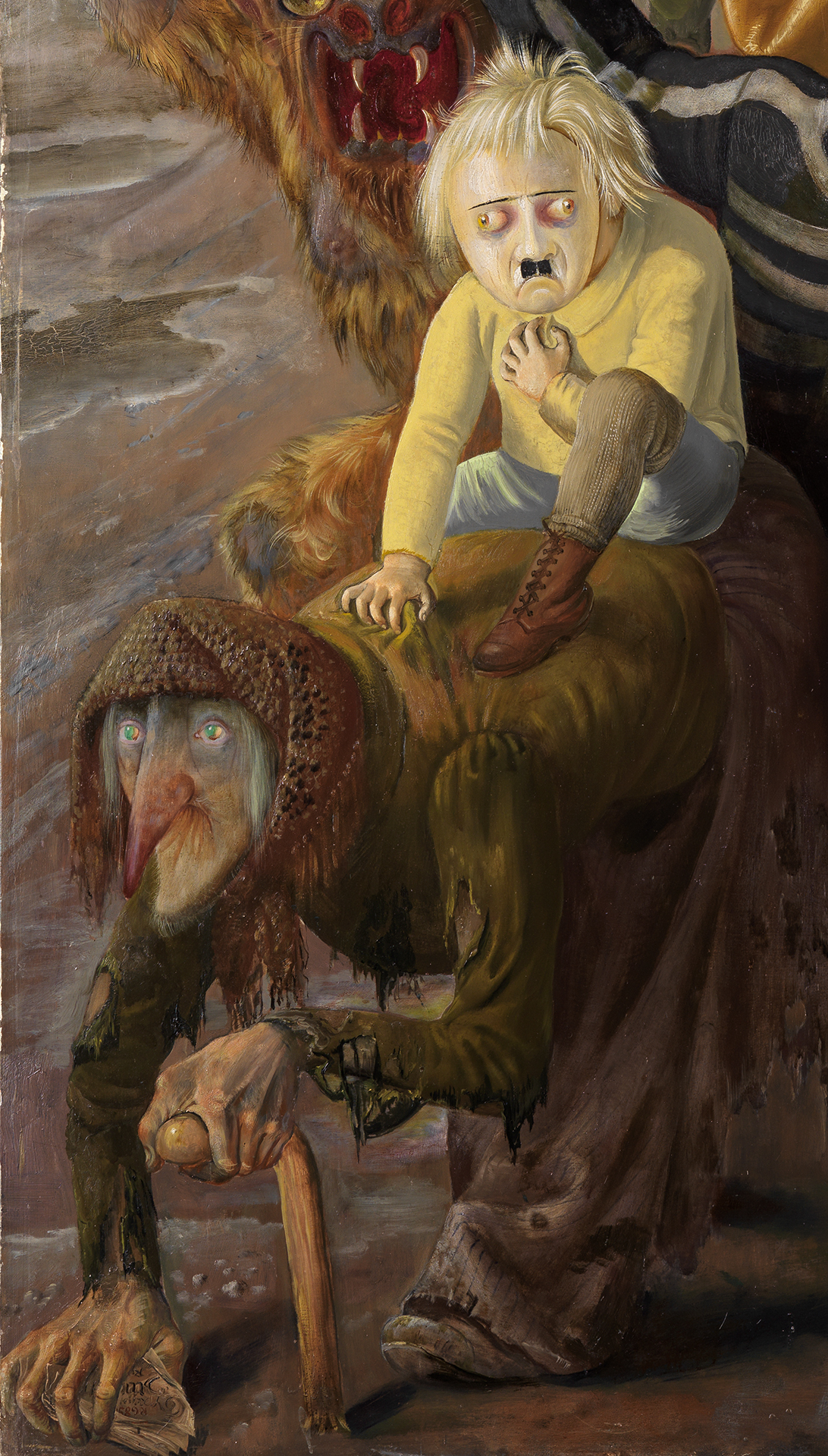
On the left, bent double, Greed leads the procession as a scrawny witch. On her hump crouches Envy wearing a mask; a dwarf in a poison-yellow top.
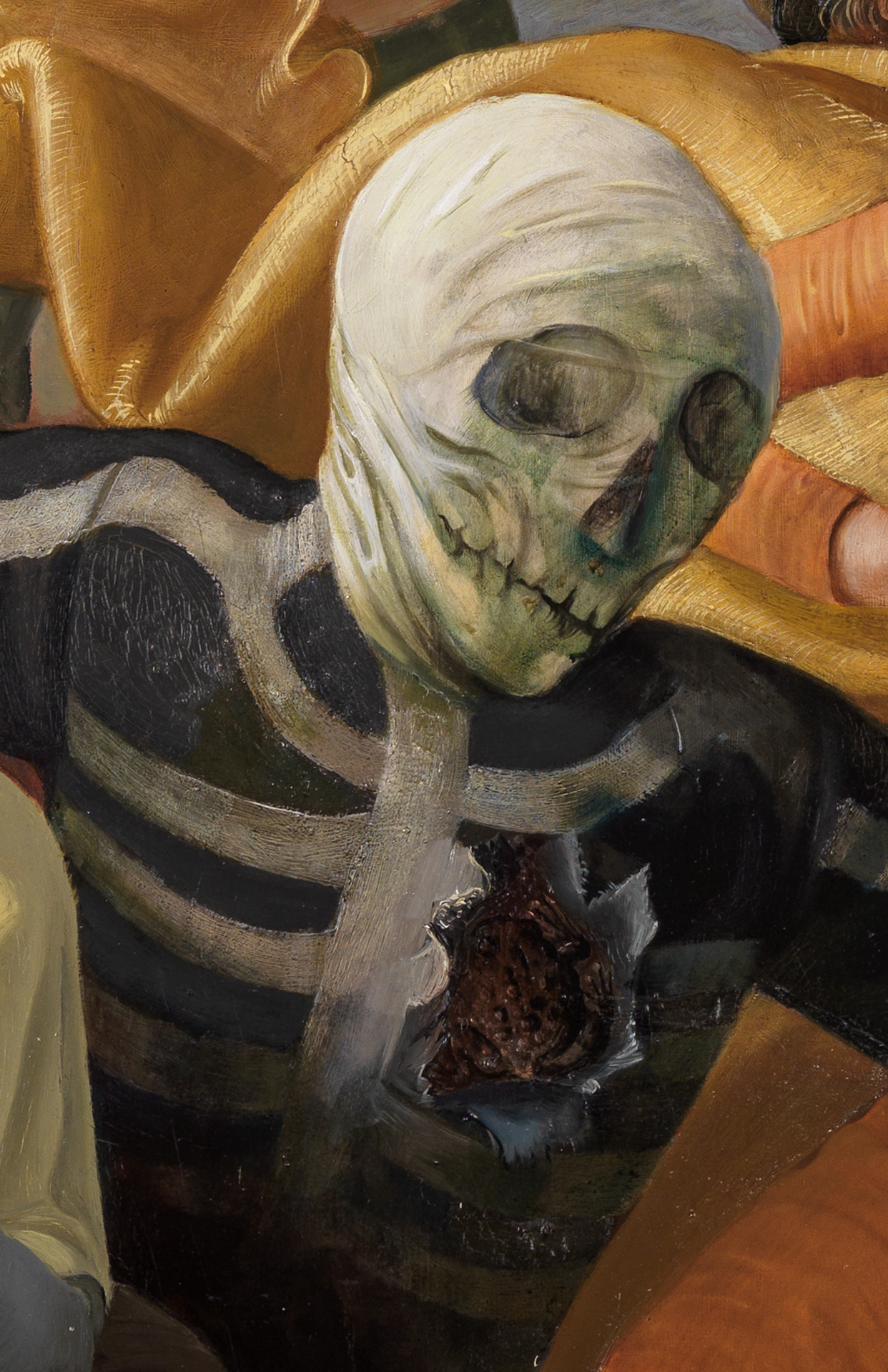
The scythe-wielding dancer behind him wears the skeleton’s costume of Death. In the gaping wound above his heart crouches a toad: symbol of the heart’s Sloth.
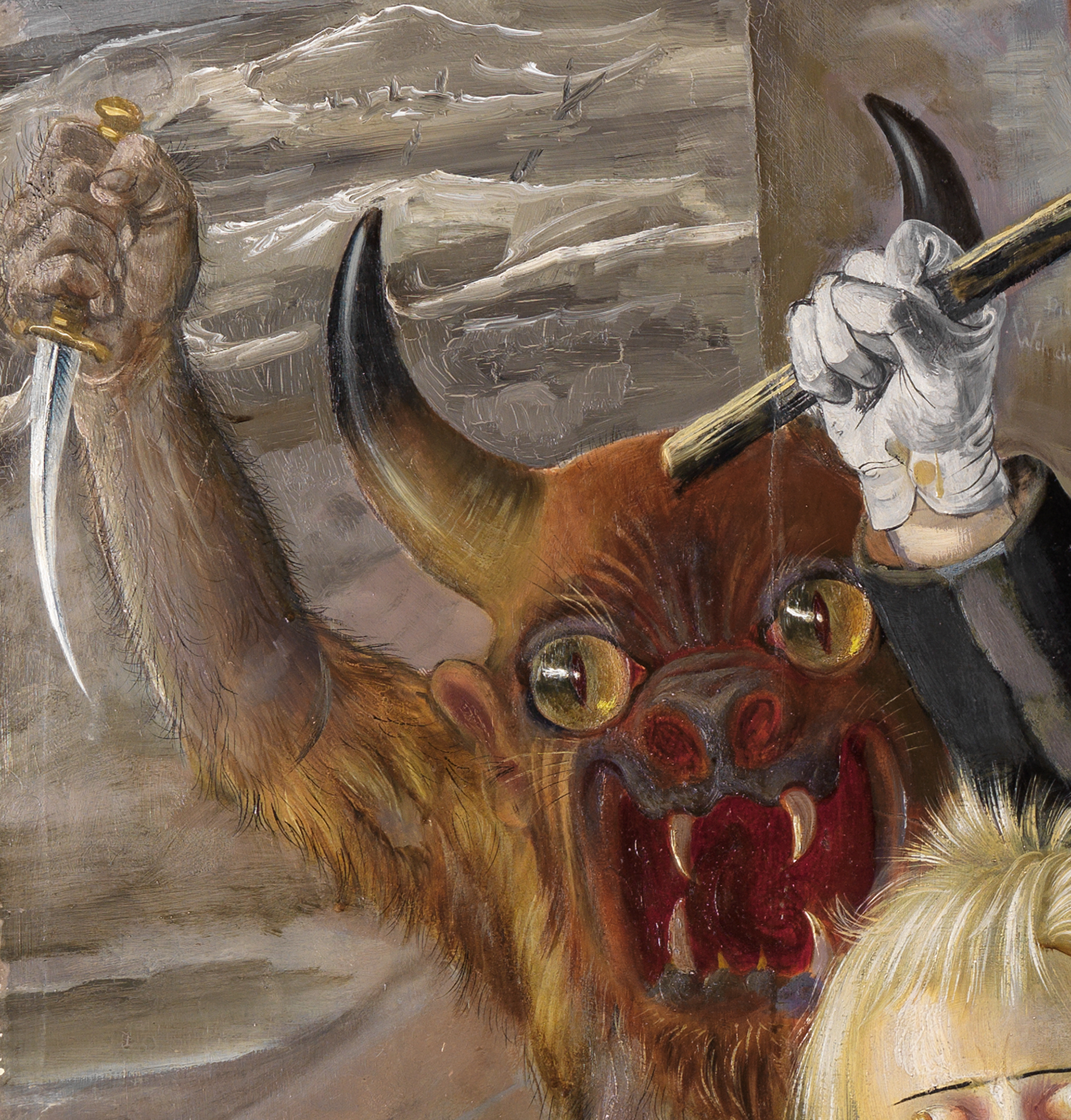
Furious Wrath, on the other hand, is embodied by the hairy monster with a pointed dagger, horns and canines, to the left of the Grim Reaper.
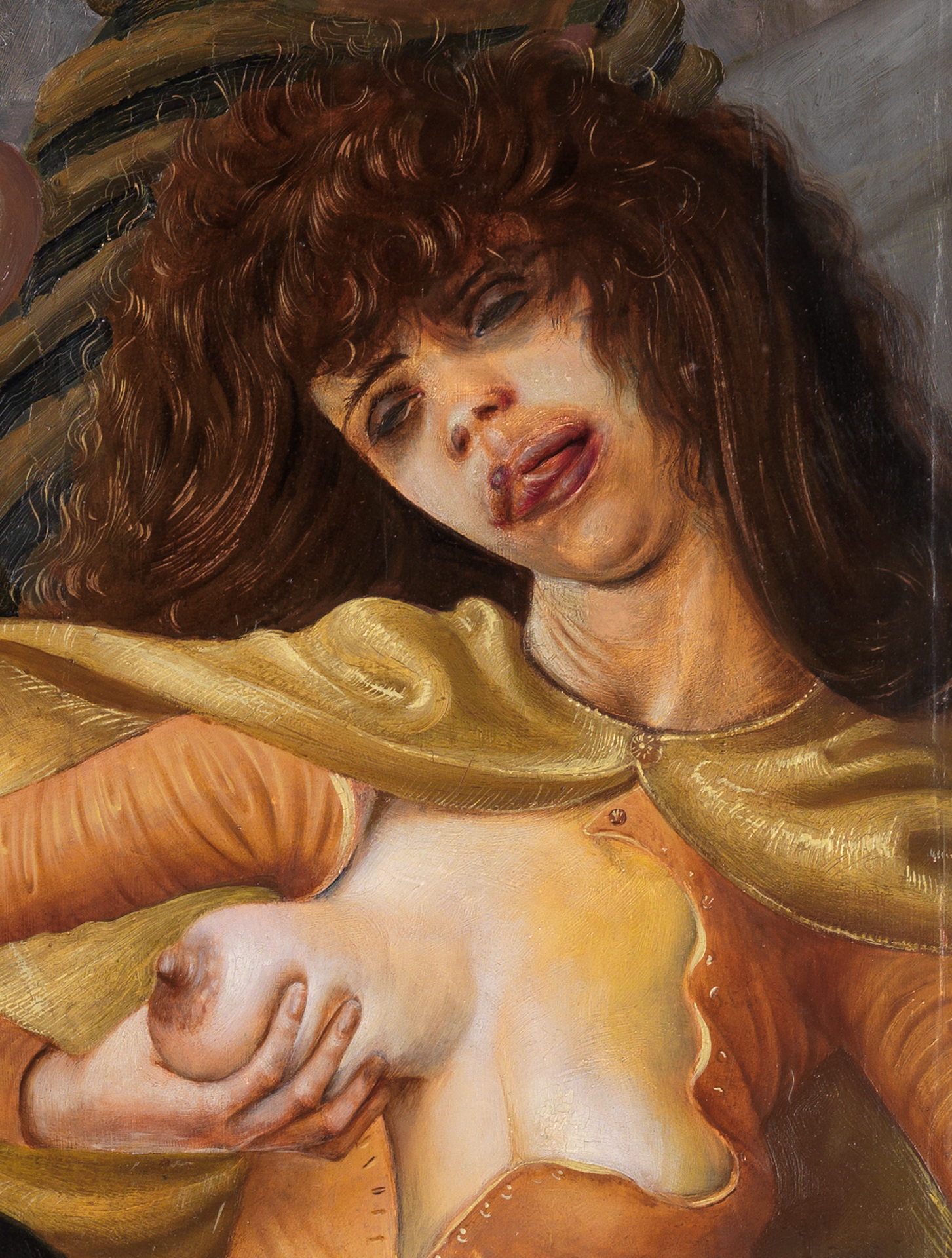
Lust is a dancing prostitute, to the right, with shameless gestures. Her dress opens like an oversized vagina.
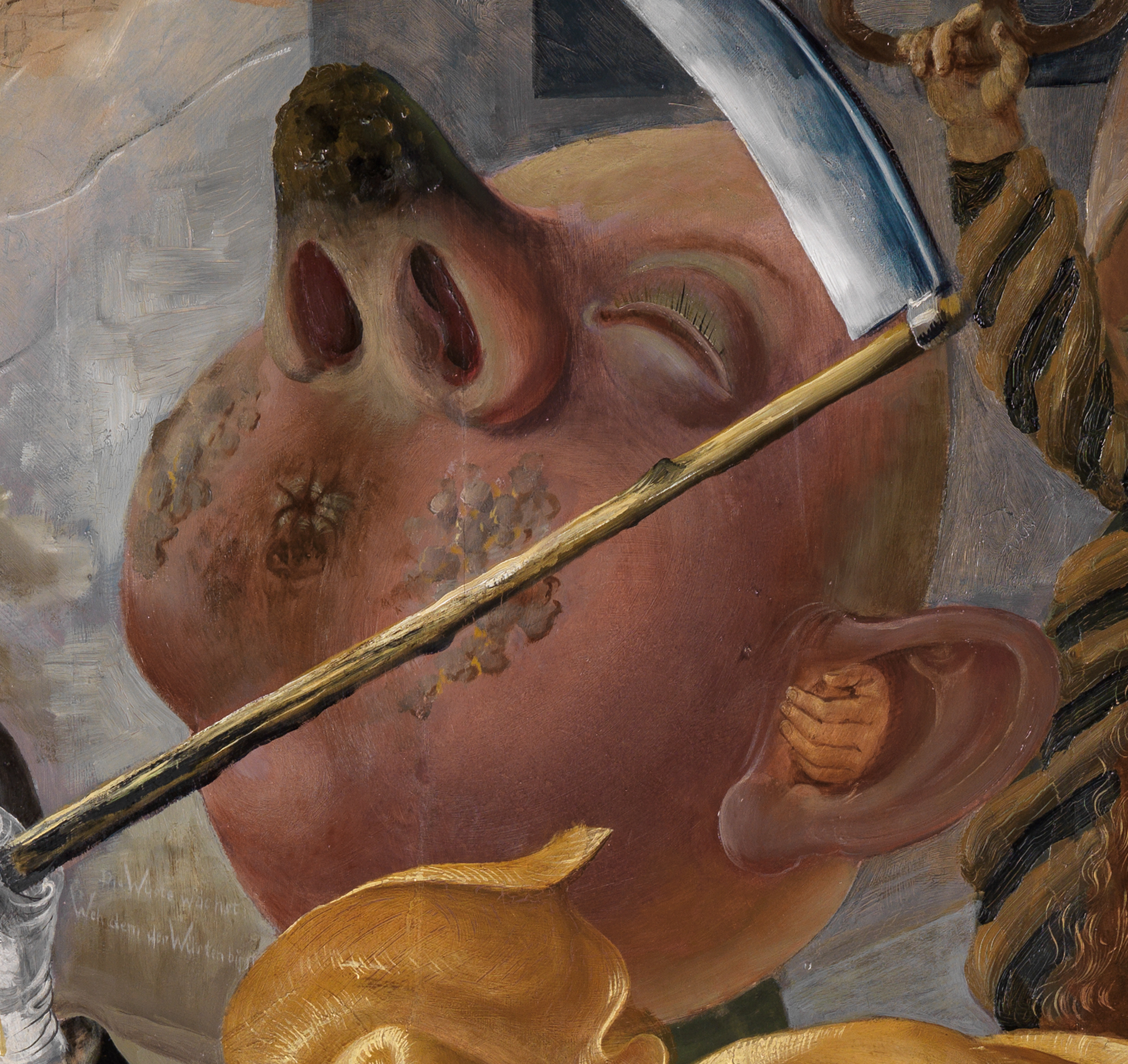
Next to it Pride stretches his stupid face up into the air.
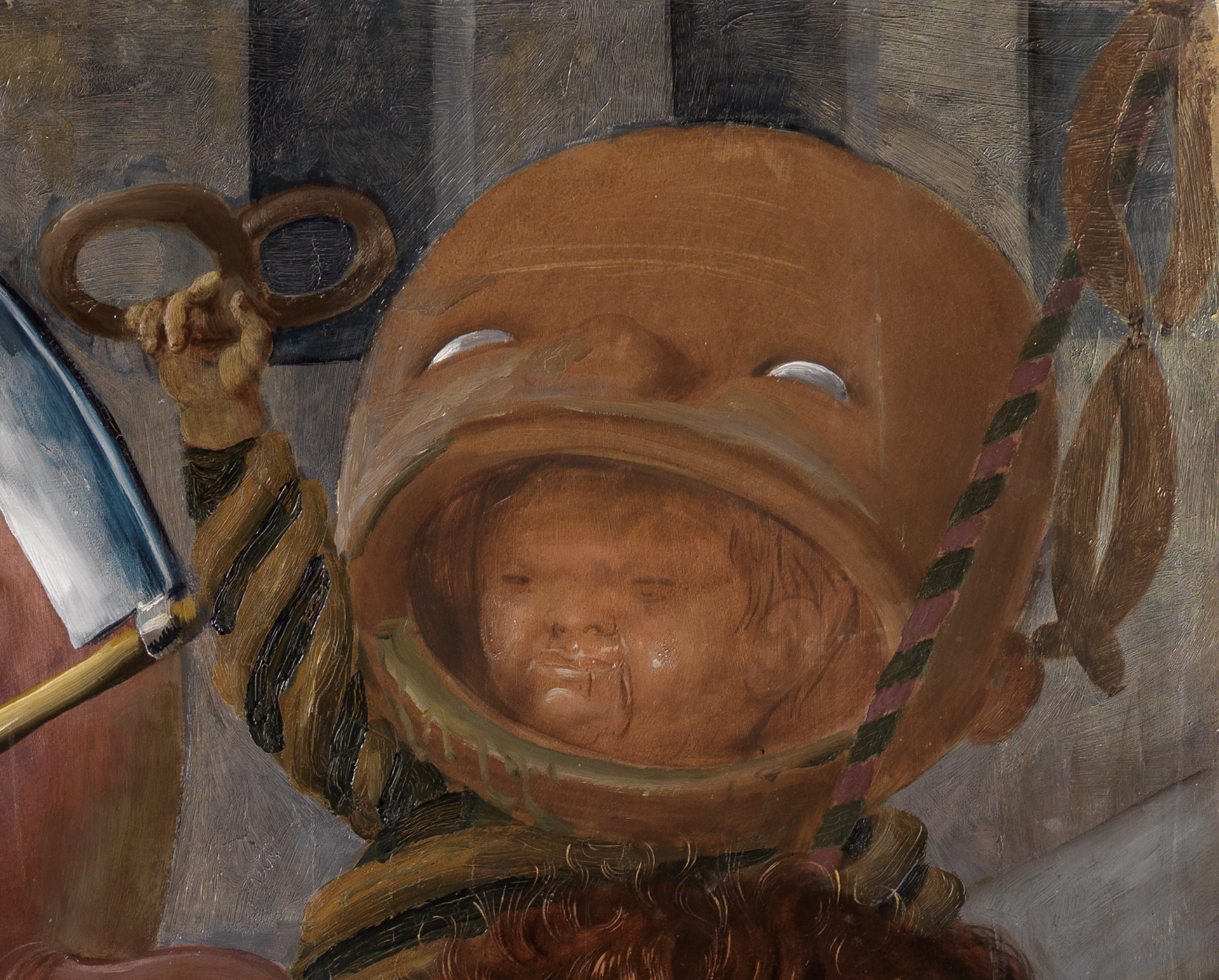
Bringing up the rear is Gluttony, stumbling along, trailing pretzels and sausages.
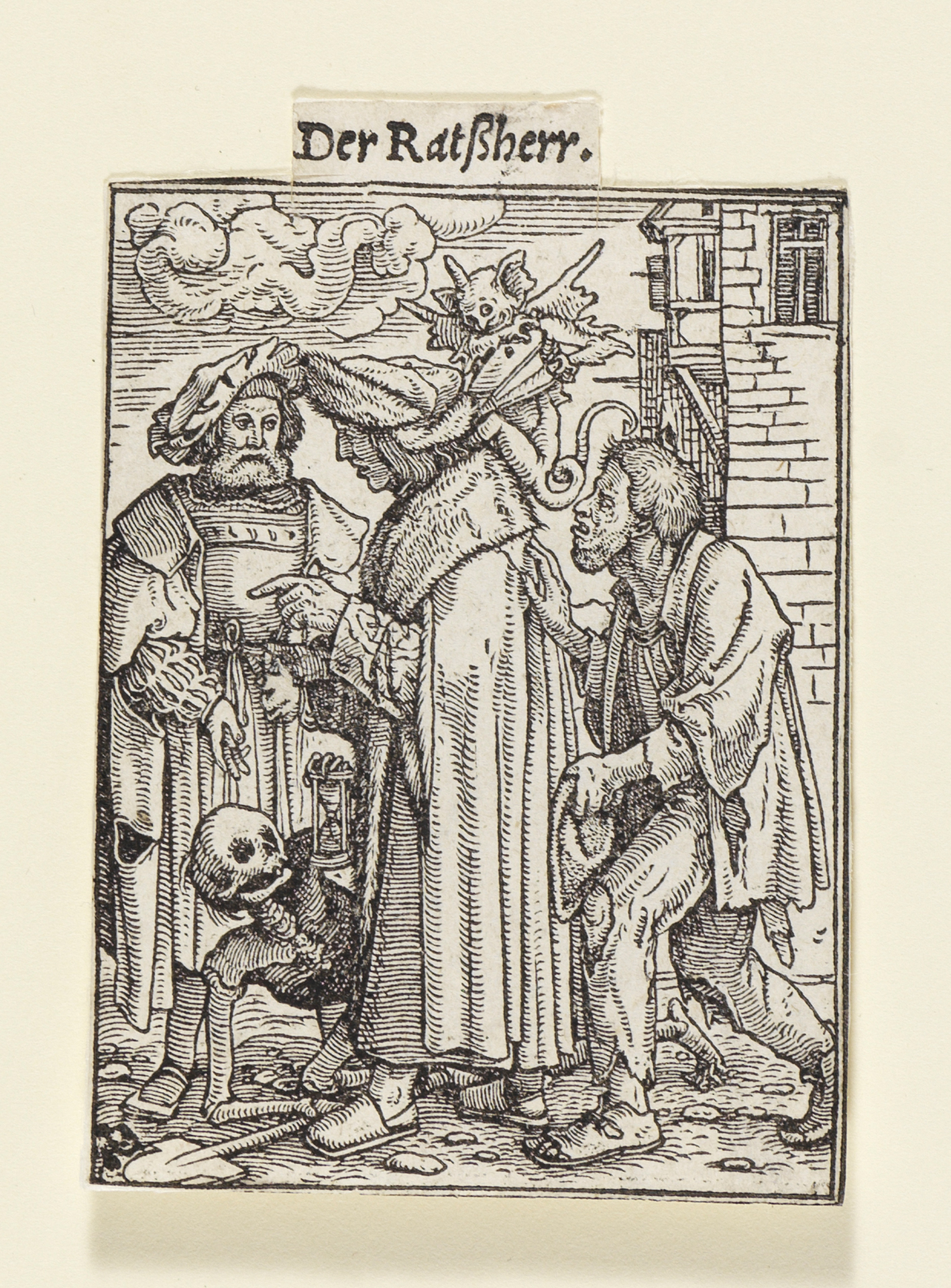
Otto Dix painted this dance of sins with a precise old master technique. He continues the tradition of late mediaeval depictions of the dance of death, but it is the current situation to which he is referring. Shortly before this painting was started, the artist was dismissed by the Nazis from his professorship at the Dresden art Academy. Dix had already sketched the composition for his seven deadly sins, but only later, in 1947, he added a striking detail: Envy now wears a Hitler moustache.