


Italian Rationalism in Black and White
0:00
0:00
In the 1980s, Günther Förg began his photographic research into modernist architecture. On his travels, he photographed buildings in various countries by architects whose work was informed by the ideas of a linear, functionalist design.
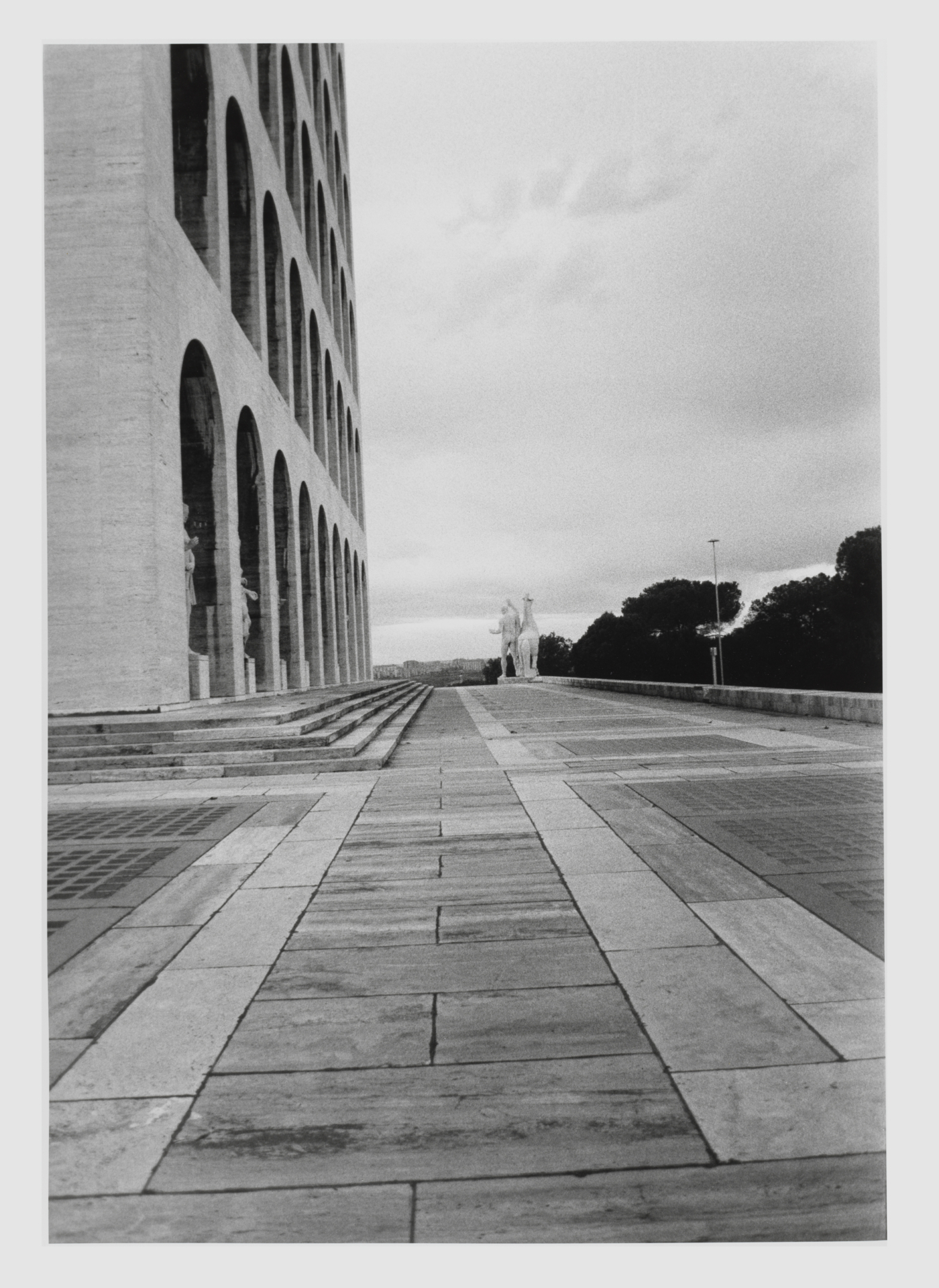
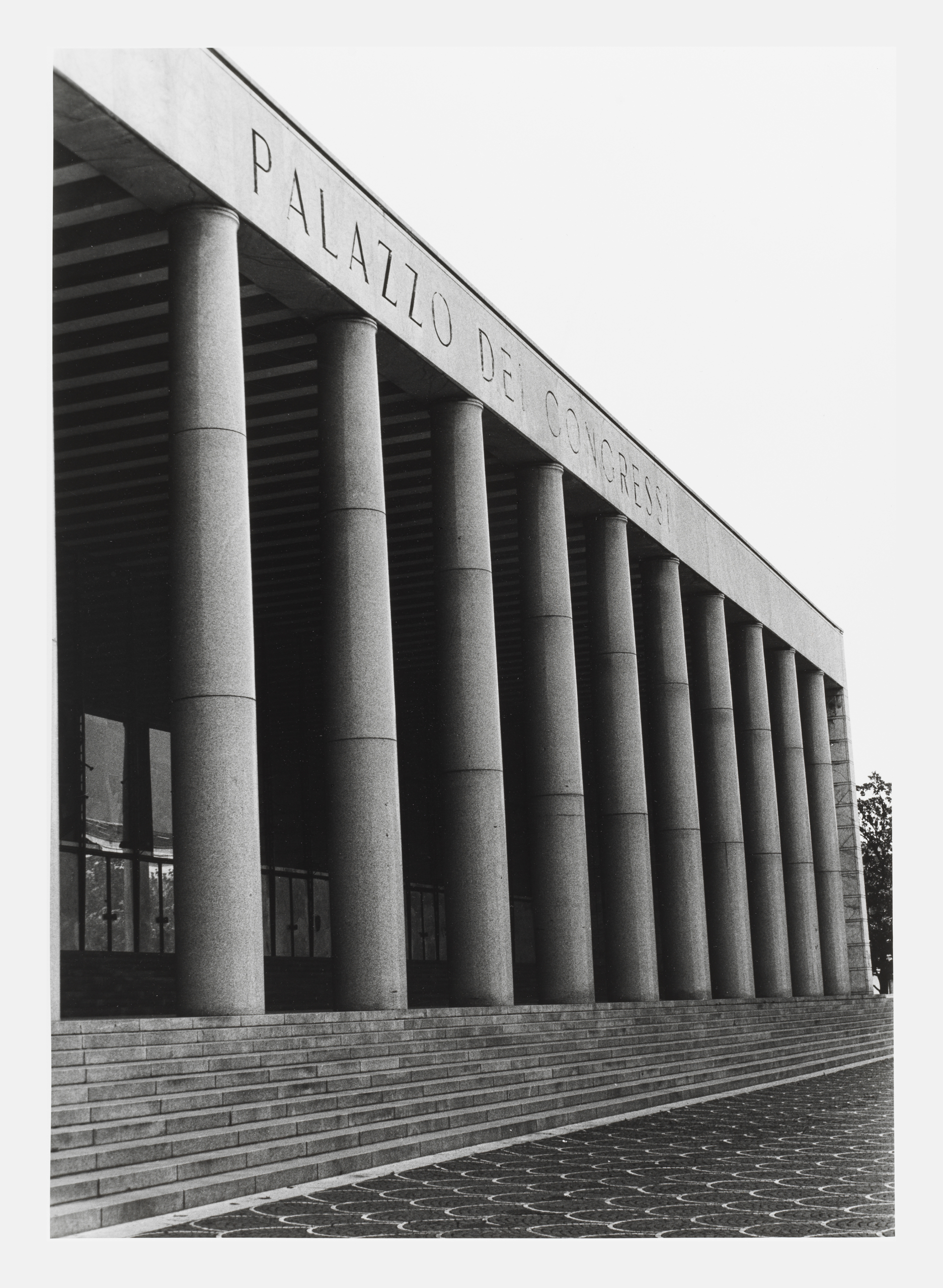
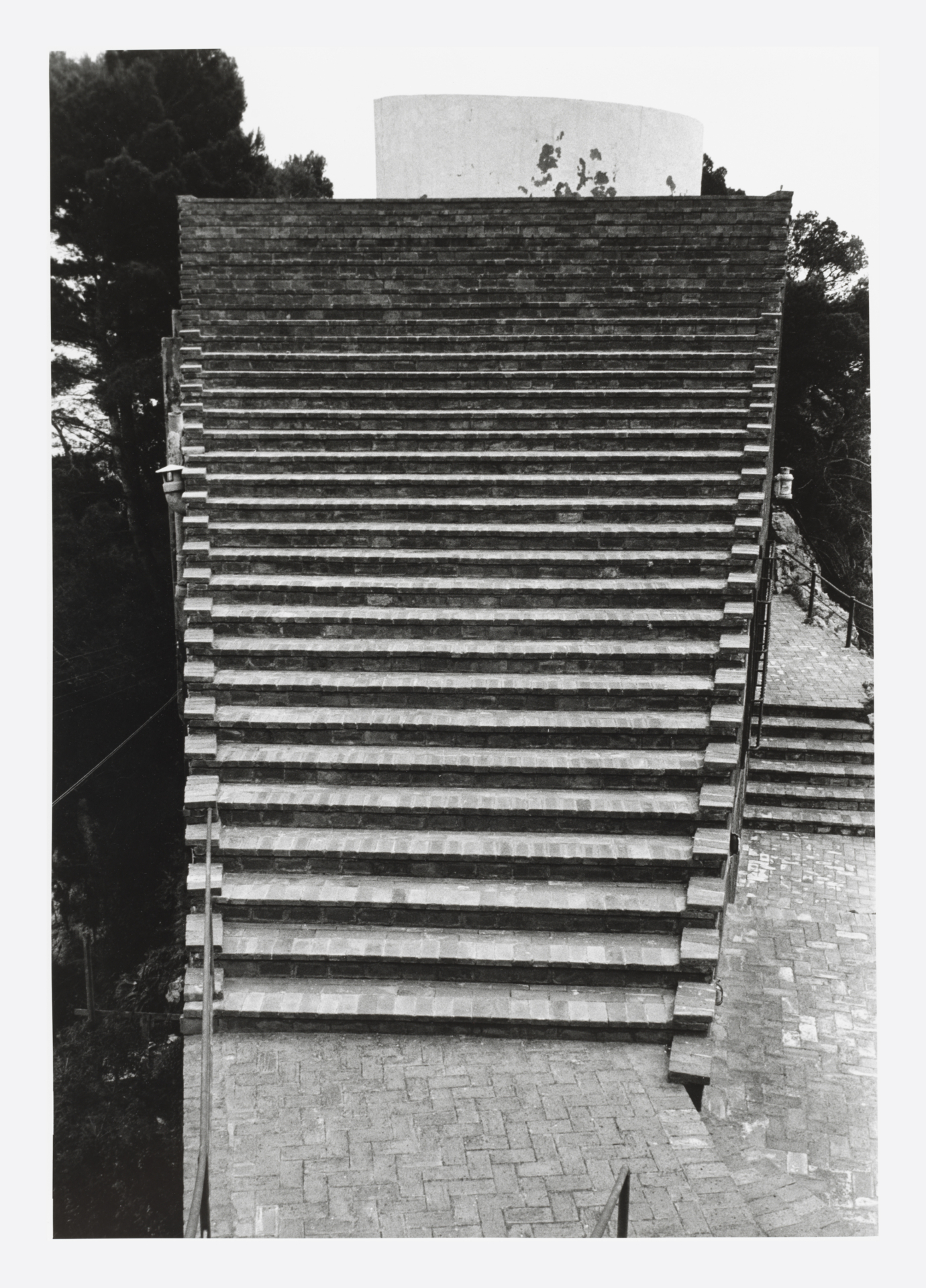
His critical engagement with this style of architecture led to a series focusing on buildings influenced by Italian Rationalism and fascism. The series includes views on display in different hangings of the works in the exhibition: the Palazzo dei Congressi, Villa Malaparte on Capri, Colonia Marina di Chiavari, Lingotto, the Fiat Works in Turin, the Palazzo della civiltà italiana and the Casa del Fascio, Como.
A uniquely special atmosphere
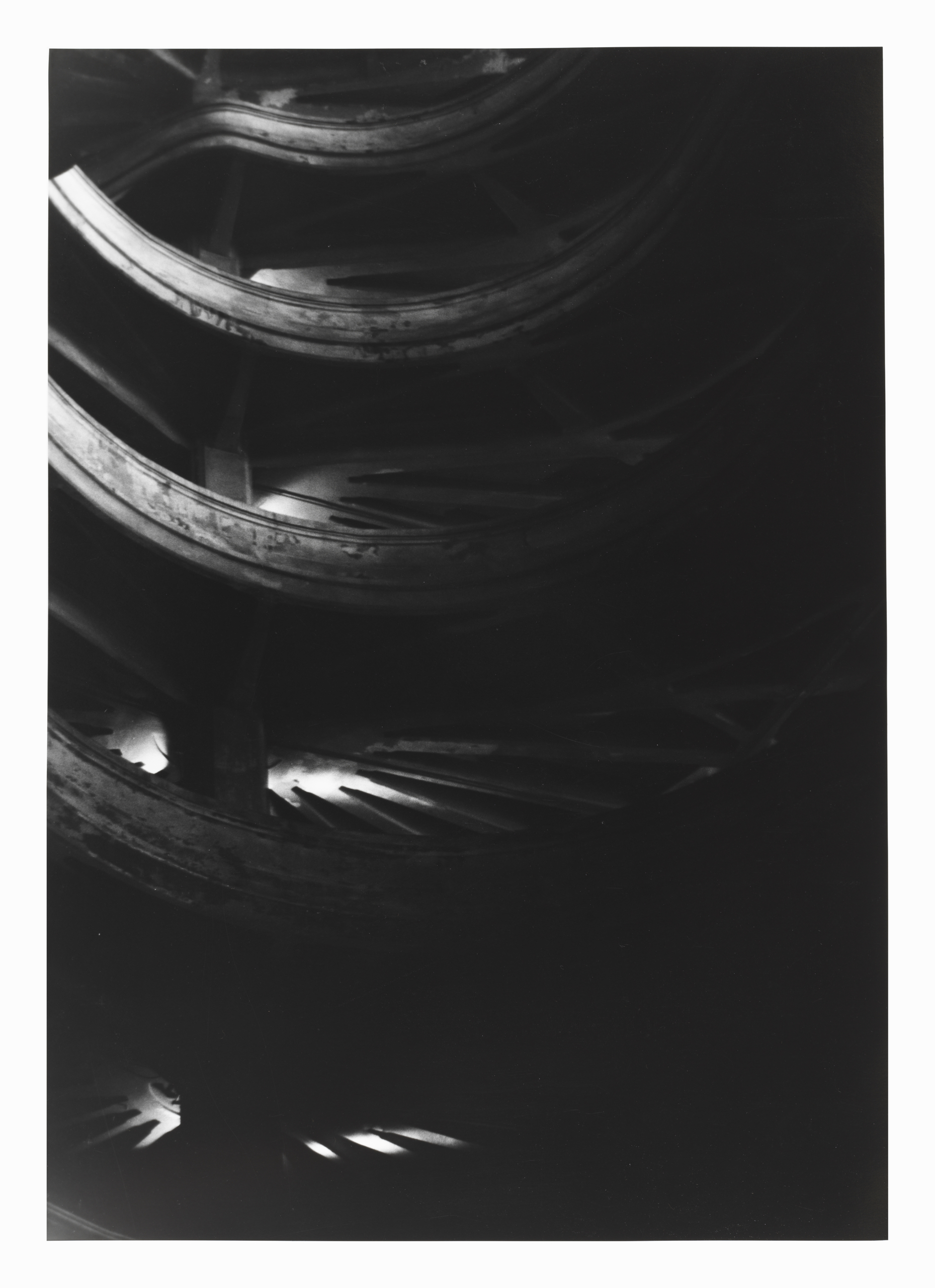
The photographs, in sharp contrast and often with a grainy quality, show bleak scenes devoid of people. Always taken from a subjective perspective, the architectural features are often in shadow. Rather than appearing glorified, the buildings seem to testify to a dark and tainted past, encouraging us to think about their original functions and aesthetics.
»una casa come me: triste, dura, severa«
For instance, Rome’s Palazzo della Civiltá italiana – Palace of Italian Civilisation – is regarded as the epitome of Fascist architecture in Italy. Originally designed for the 1942 World Fair, it was seen as an opportunity for Mussolini’s Fascist Party to celebrate its 20th anniversary of coming to power. But the World Fair never took place; by then Europe was embroiled in the Second World War.
The building’s many arches gave it the nickname Colosseo Quadrato, the Square Colosseum – a name evoking the former glory of the Roman Empire and its highly influential architectural achievements.
Today, a major Italian fashion house rents the building as its headquarters. The façade is still decorated with a quote from one of Benito Mussolini’s speeches. The Villa Malaparte – another photograph in this series – was built for the writer Curzio Malaparte, who dreamt of a house as «sad, hard and austere» as he was himself.
Architecture’s political dimension
With his insightful photo series from the 1990s, Förg was among the first to point up the darker side of a modernism instrumentalised by fascism and totalitarianism, and underline the need to reappraise the buildings of that era.
Even today in Italy, the problematic nature of this part of history is hardly ever discussed. Given the resurgence of conservative and right-wing populism, these photographs are still highly topical a good thirty years after they were taken.