


Architectural Impressions as Treasured Keepsakes
0:00
0:00
Arthistorian: A very warm welcome to the Kunsthalle! I am your guide and very happy to answer your questions about the works on show or about our museum.
Visitor: Thanks – and I do have a question about these paintings. Their format is so very different format from the others. Why are these round?
Arthistorian: In the context of painting, a work in this circular format is called a tondo – or tondi in the plural. Artists used – and still use – the tondo to focus on a particular subject or scene considered especially significant, noble or even sublime. The tondo format is often found in the oeuvre of Johann Wilhelm Baur, a German etcher and miniaturist.
Although born in Strasbourg in 1607, Baur is primarily known for works produced in Rome and Vienna. In those days, Rome was Europe’s leading centre for the arts. Baur lived in the city for at least six years and – as you see – also painted both these pictures there.
At that time, Rome attracted innumerable artists, drawn to study classical works of art just as much as masterpieces by such great Renaissance painters as Michelangelo and Raphael. Numerous artists spent their entire lives in the Eternal City. Baur not only received commissions from local aristocratic patrons, but his vedute were also especially popular with visitors to the city.
Visitor: Vedute? I’ve never heard the word before.
Arthistorian: Essentially, it means a view or vista and comes from the Italian veduta – or vedute as a plural. This style of painting depicts a topographical view of a city or town, presenting particular buildings or squares. Such vedute were much in demand among tourists as souvenirs of, for instance, their stay in Rome.
Baur is regarded a pioneering figure in this genre, if not its founder – the inventor of a composition primarily based on the view of a town’s physical appearance, its buildings, squares, and architectural features.
Visitor: So what we’re looking at are vedute?
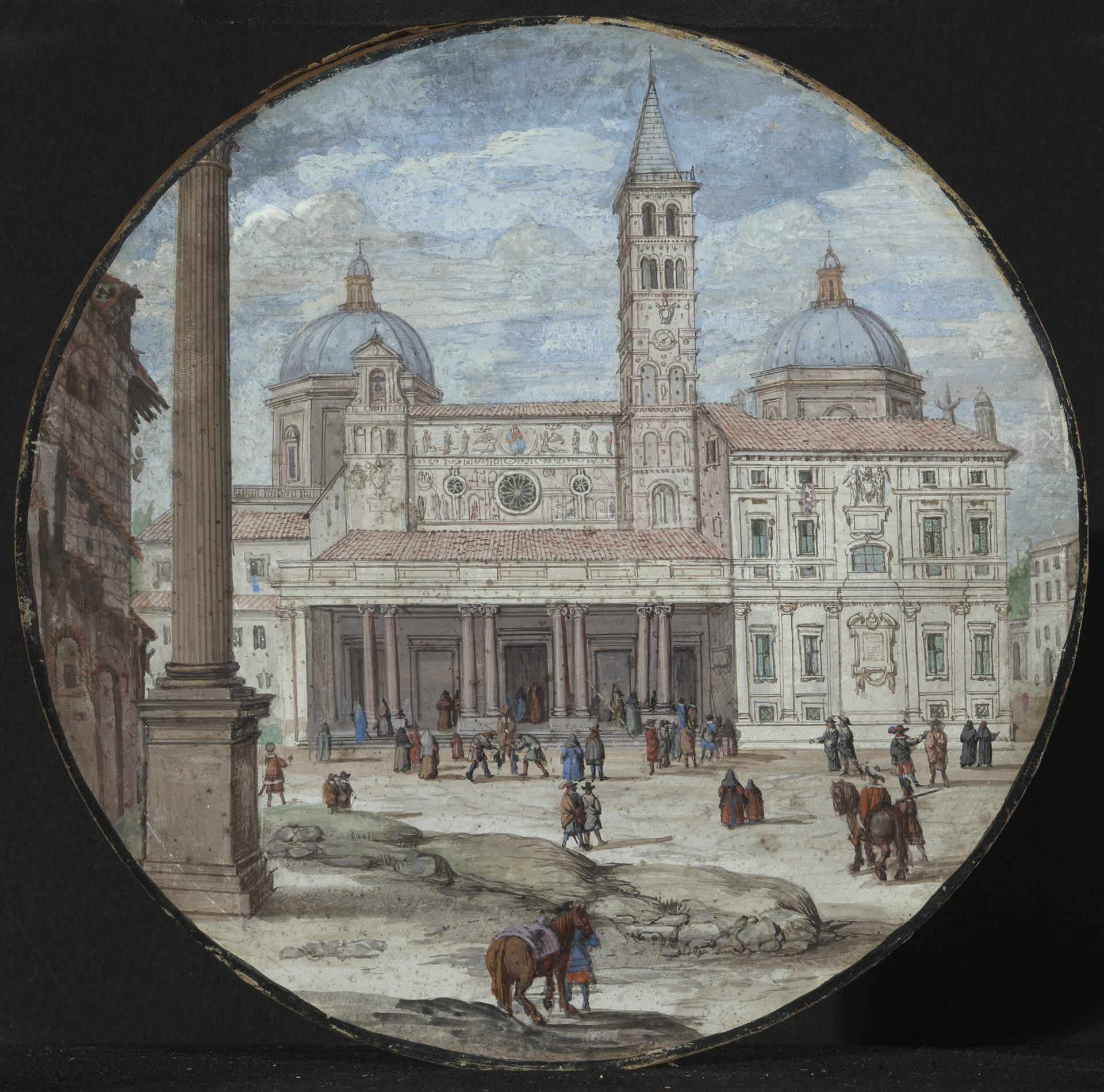
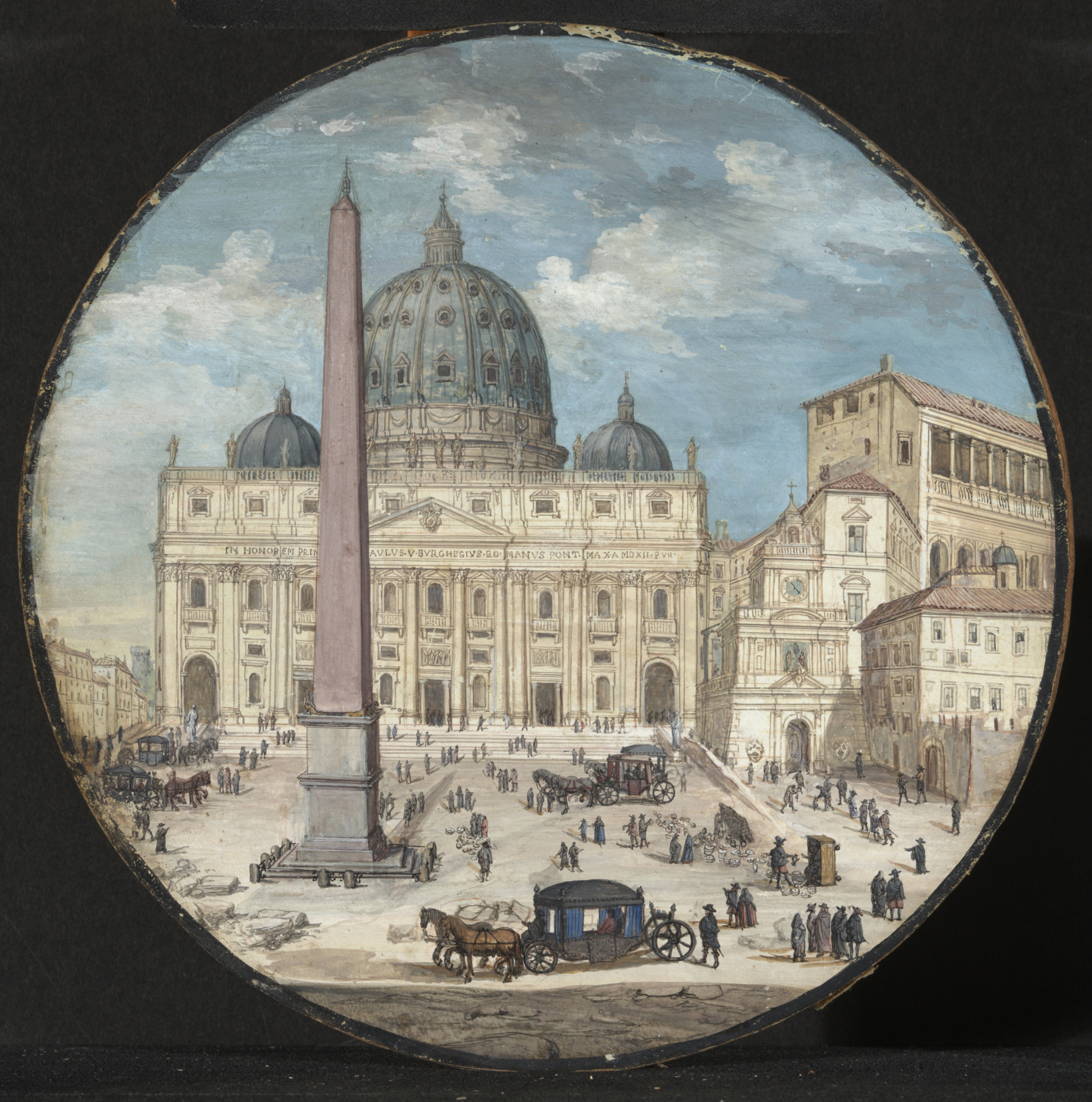
Arthistorian: Yes, that’s right. Two views of Rome by Baur. On the left, as seen from St. Peter’s Square, the famous basilica of St. Peter’s with its dome designed by Michelangelo; on the right, the church of Santa Maria Maggiore with its 75-metre-high bell tower. At that time, since artists could make numerous copies from an engraving, vedute were usually only prints. That makes Baur’s two painted vedute here rather special – exclusive luxury articles filling a gap in the market.
Visitor: The view of St. Peter’s seems a little odd. Doesn’t it look very different today?
Arthistorian: It does, yes. When Baur painted this veduta, the square had only existed for a few years. Moreover, he didn’t just copy what he saw, but rendered it in an idealised form. Actually, for instance, from this perspective on the square, you couldn’t have seen Michelangelo’s dome that well at all.
But the dome, though, is one of the basilica’s signature features. So Baur made it easily identifiable. After all, precisely portraying the scene was not the most crucial thing. Remember, vedute were bought by visitors and pilgrims to show family and friends at home. So the vedute‘s main aim was to depict the buildings and scenes most people would recognise.
Visitor: Rather like an early form of postcard or souvenir.
Arthistorian: Exactly – which is why vedute are also called ‘souvenir views’. For us now, they provide a fascinating insight into how cities and towns looked in the past. Today’s Santa Maria Maggiore in Rome has been refurbished several times, and looks very different from the church in Baur’s tondo.
Visitor: So vedute also tell us how a city has changed down the centuries… but what happened to Bauer after he left Rome?
Arthistorian: He moved to Vienna in 1637 and worked for the court there. He only lived for another five years, yet over half his oeuvre was produced in Vienna. Baur died in 1642, aged just 34.