


A Stage for Megalomania
0:00
0:00
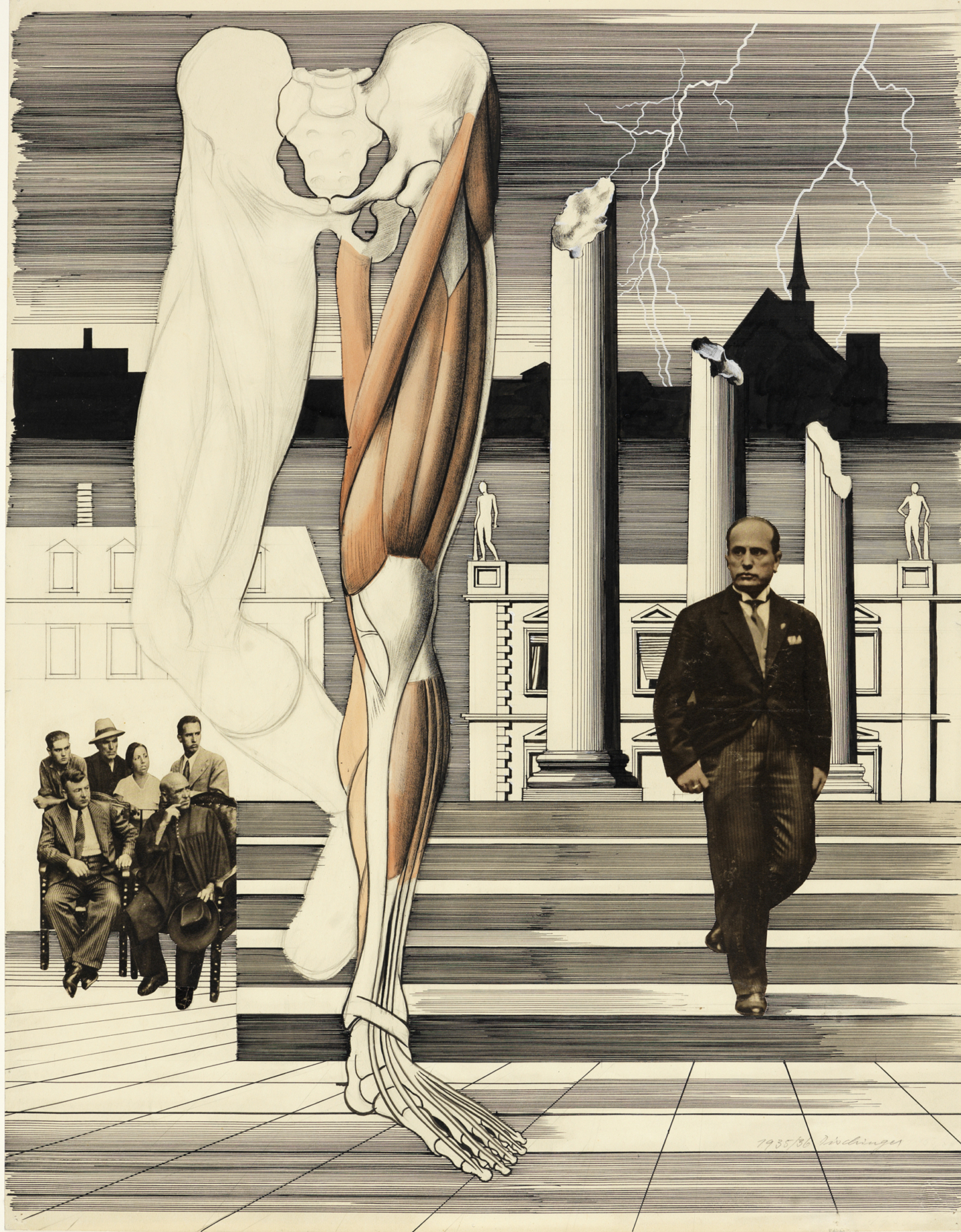
An impressive composition. Initially, our eyes are drawn to the prominent anatomical study dominating the scene. It shows the pelvic bone and the internal structure of the leg of a person walking.
This leg, from our perspective, on the right, gives a precise impression of the individual muscles and tendons; in contrast, the leg to our left, wearing a boot, is merely sketched in. They are in the classic contrapposto pose: the weight on one leg, while the other leg is free.
And that’s also echoed in the elegantly dressed figure to the right, confidently walking down a stage-like set of steps – Benito Mussolini, the Italian Fascist leader. The group to the far left intently watches the dictator’s theatrical appearance.
Three broken classical columns set against a Renaissance palazzo form the backdrop to this seemingly surrealist scene. Rendered in foreshortened perspective, the rear columns are dramatically smaller; to the left of the palazzo, there is a neo-classical house. The gathering thunderstorm over the city in the distance can be read as alluding to an impending disaster.
Ambitious plans for major building projects
Rudolf Dischinger’s collage is suggestive. In May 1936 in Rome, Mussolini announced his intention of re-establishing the ancient Roman Empire. In its monumental design, the Fascist building programme he launched emulated the grand scale of imperial Rome. Dischinger, though, depicts the ancient columns without necks or capitals, underlining the construction’s fragmentary and frail nature.
Analogously, the anatomical study also lacks a torso and head. Juxtaposing the physical body and architectural structures in this way is both astonishing and, at the same time, insightful. Here, they can both be read as standing for a flawed political ideology, system and view of humanity.