A Confrontation of Contrasting Realities
0:00
0:00
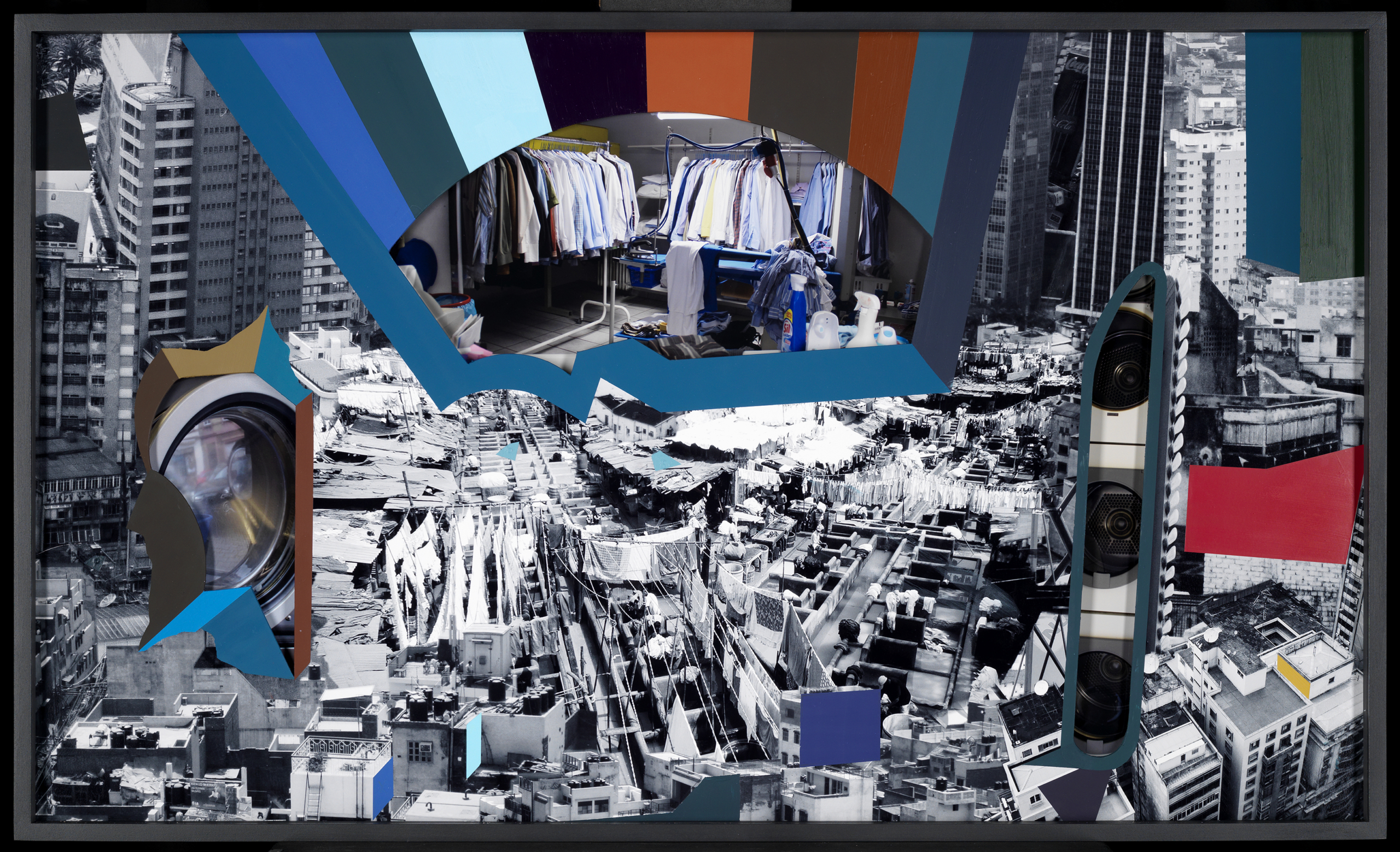
High rises, roofs and washing lines. Abstract areas of colour and details in black and white. Our first impression of this collage-like image may well be just as overwhelming as the workplace itself in Mumbai, India, which Franz Ackermann has depicted here. This district set between tower blocks in the south of Mumbai is known as the Dhobi Ghat, and is reputedly the world’s largest outdoor laundry facility.
In difficult conditions, the workers there – the dhobis – process a vast amount of laundry from hotels, restaurants and hospitals. All the laundry tasks are done by hand by around 7000 dhobis. The pieces are prepared in concrete wash tubs, beaten, washed and wrung out, then bleached and ironed in corrugated iron huts amid washing lines packed with sheets and clothes hung up to dry.
To skillfully unite two contrasting worlds
Have you noticed how Ackermann structures the pictorial levels to create a sense of depth? Fields of colour arranged across the surface frame detailed photos, creating vibrant highlights in the cityscape. Take a look at the photographs in the deeper picture planes. These form a sharp contrast to the other views.
Ackermann pairs the seemingly chaotic Dhobi Ghat with the orderly interior of a Karlsruhe laundry, the finished shirts neatly hanging over the ironing table. The washing machines, only visible in narrow cropped photos, stand for the mechanisation of the workplace.
Ackermann evokes the radically different living and working conditions in Germany and in other countries, and juxtaposes urban conurbations of very different sizes – Karlsruhe with just over 300,000 residents and Mumbai with a population of 20.5 million people.
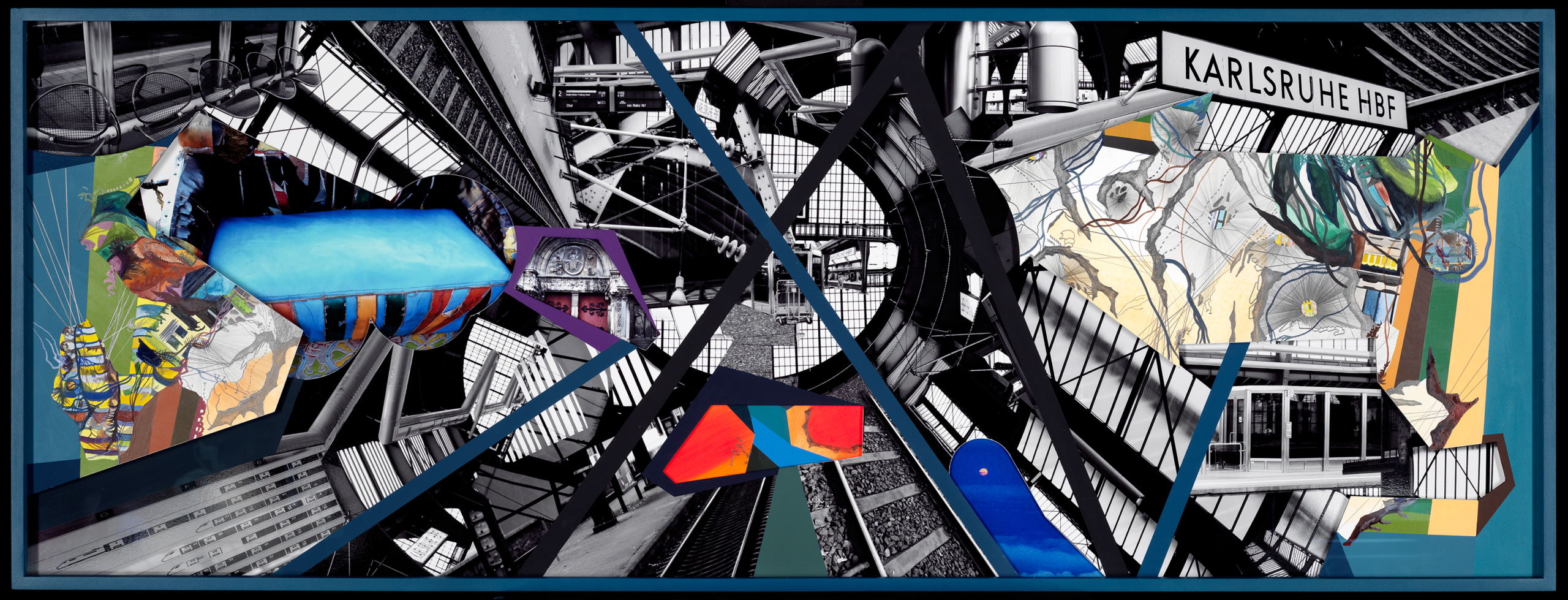
The Karlsruhe station in all its facets
Ackermann’s Späte Ankunft – Late Arrival – is also on show here. You might well recognise this location as Karlsruhe’s Main Station. What sounds and memories do you associate with train stations? And when you look at this work, what emotions does it evoke?