


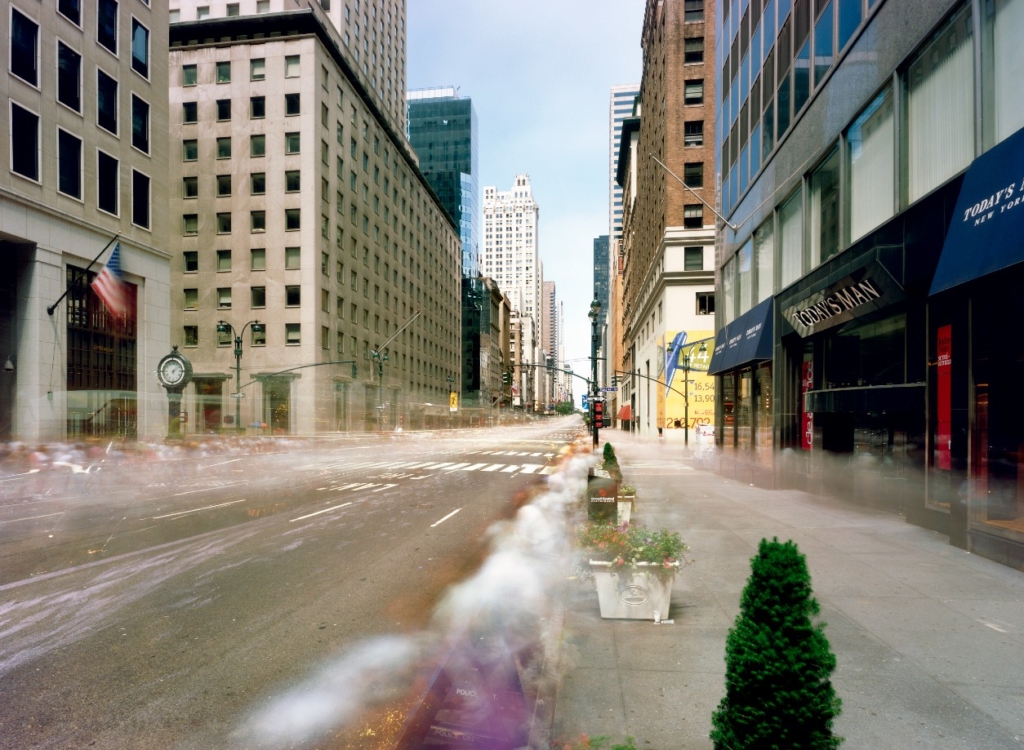
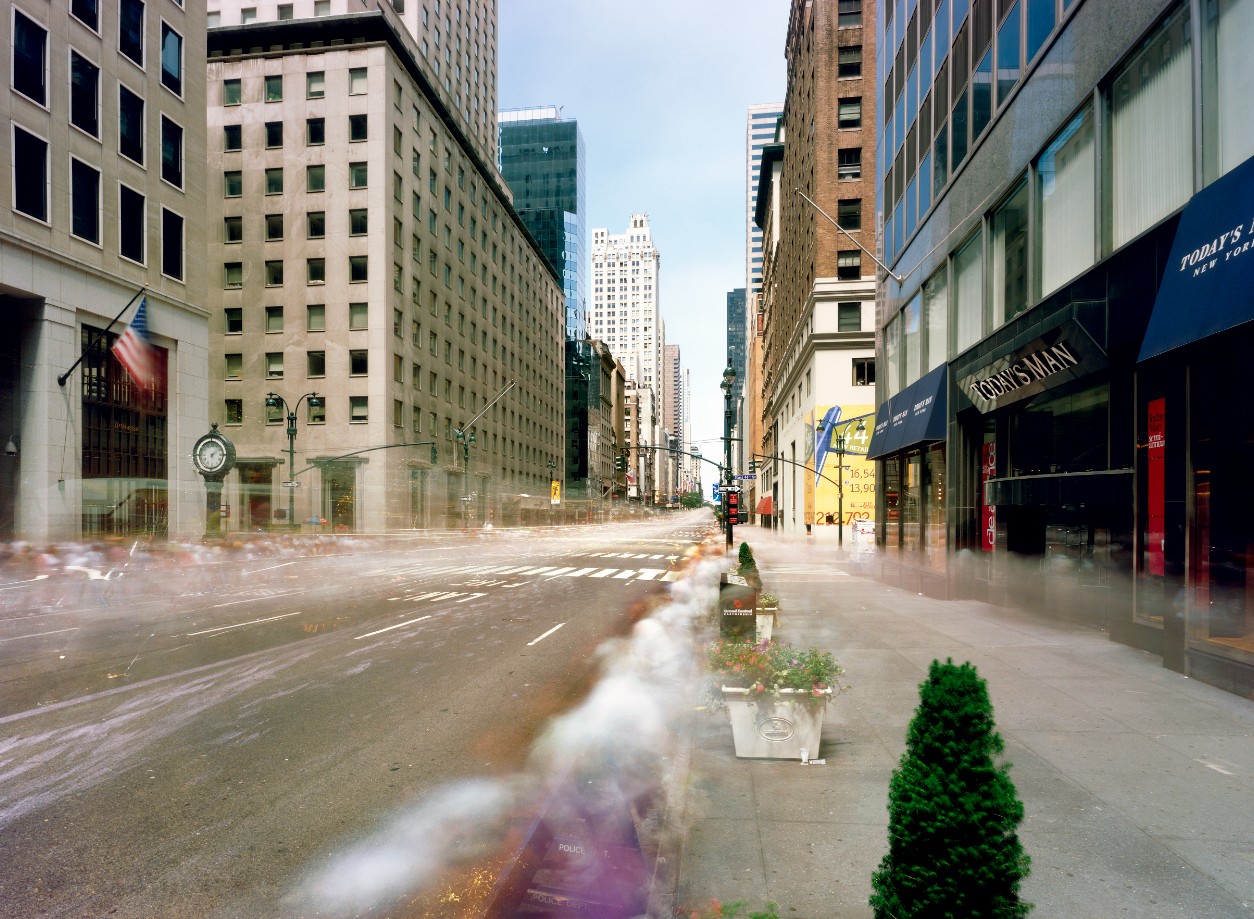
Michael Wesely – New York Short Stories – Gay Pride Parade, New York (14:11 – 16:23 Uhr, 28.06.1998)
Michael Wesely
Two Hours Captured in one Photograph
0:00
0:00
Time seems to stand still. A strange, diffuse mist hangs over the broad street. The photograph shows an urban canyon, lined with skyscrapers left and right. This nebulous haze is neither a low cloud produced by climatic conditions nor steam rising from manhole covers, a frequent sight in New York. Instead, these are traces of a major event – evident when we look more closely at the hazy patches on the sidewalks and along the edge of the street.
In them, we can see scattered outlines of all those present when the photo was taken. In that sense, this is a memory trace between the rows of buildings. The photo was taken on 28 June 1998 in New York City, the day of the Gay Pride Parade, held annually ever since 1970 by the Heritage of Pride organisation.
The full parade in a single image
Michael Wesely captured the entire parade in a single photograph in a single exposure lasting several hours – more precisely, just over two hours from 2:11 to 4:23 in the afternoon. The blurred movements only suggest what was happening when this photo was taken. All the people and parade floats merge in space, light and time to form a cloud-like carpet.
Through the long exposure time, these streets, packed with the energy of people celebrating and demonstrating, seem to be empty, bathed in a tranquil silence – definitely not the case during such a colourful parade in the heart of New York.
Long exposure as photographic time-lapse
Michael Wesely records many events in a similar way in his photographs, capturing processes with an extremely long exposure time rather than in a series of shots. The exposures can last anywhere from a couple of hours to several years. This photographic technique gives a visible form to the difference between standing and walking, the static and the dynamic.
The Orangerie will remain closed through September 25 due to exhibition renovation work. Starting September 26, we look forward to welcoming you there to our new special exhibition, “Nicolas Daubanes. Le feu intérieur.”
Your visit