


A Glimpse into the Past
0:00
0:00
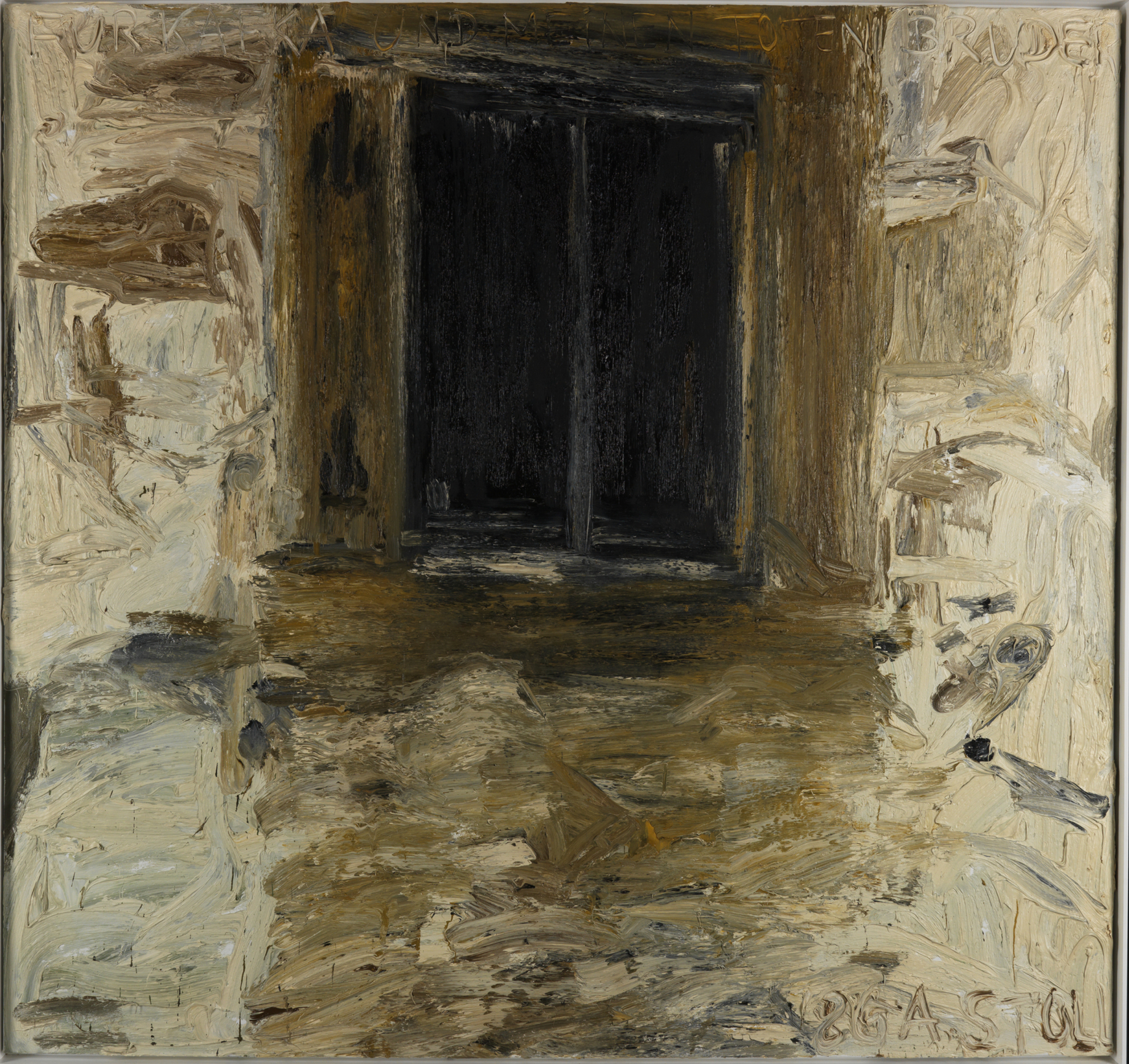
Using a brush thickly-laden with paint, Artur Stoll reproduces a whitewashed wall, creating an animated painterly relief. The wall, marked by the weather and the passage of time, seems almost sculptural, showing clear signs of the artist’s physical effort in the painting process.
The window in the upper section is framed in brown, applied with a broad brush. Rendered in a straight brushstroke, the wooden joists stand out against the façade’s more broken surface, further drawing our gaze to the window.
But rather than a view into the house, all we can see is a deep blackness, an unlit dark room. Here, Stoll blocks our view, denying the window’s function as an opening allowing us to look in or out.
Returning home
In 1984, Artur Stoll moved his studio into this stable in Norsingen, one of the places of his childhood. In his paintings, he often took this simple building, which belonged to his parents’ house, as a subject. Here, using a pointed object, possibly the back of the brush, he scratched the work’s title into the paint at the top edge while it was still wet: Für Kafka und meinen toten Bruder – ‘For Kafka and my dead brother’.
A reference to Kafka’s introspections
For the writer Franz Kafka, windows are often symbols of inner reflection. They may represent an opening to the outer world, but can also stand for melancholy, especially when the anticipated view remains unseen.
This work can be read as an epitaph. In the title’s dedication to his brother, Artur Stoll alludes to a personal tragedy in his family. Since his brother Klaus, who was two years older, died shortly after birth, the brothers never knew each other. By evoking the architecture of his childhood, Stoll creates a bridge to the events happening at this place before he was born.