


Labyrinthine Rooms and Fantastic Architecture
0:00
0:00
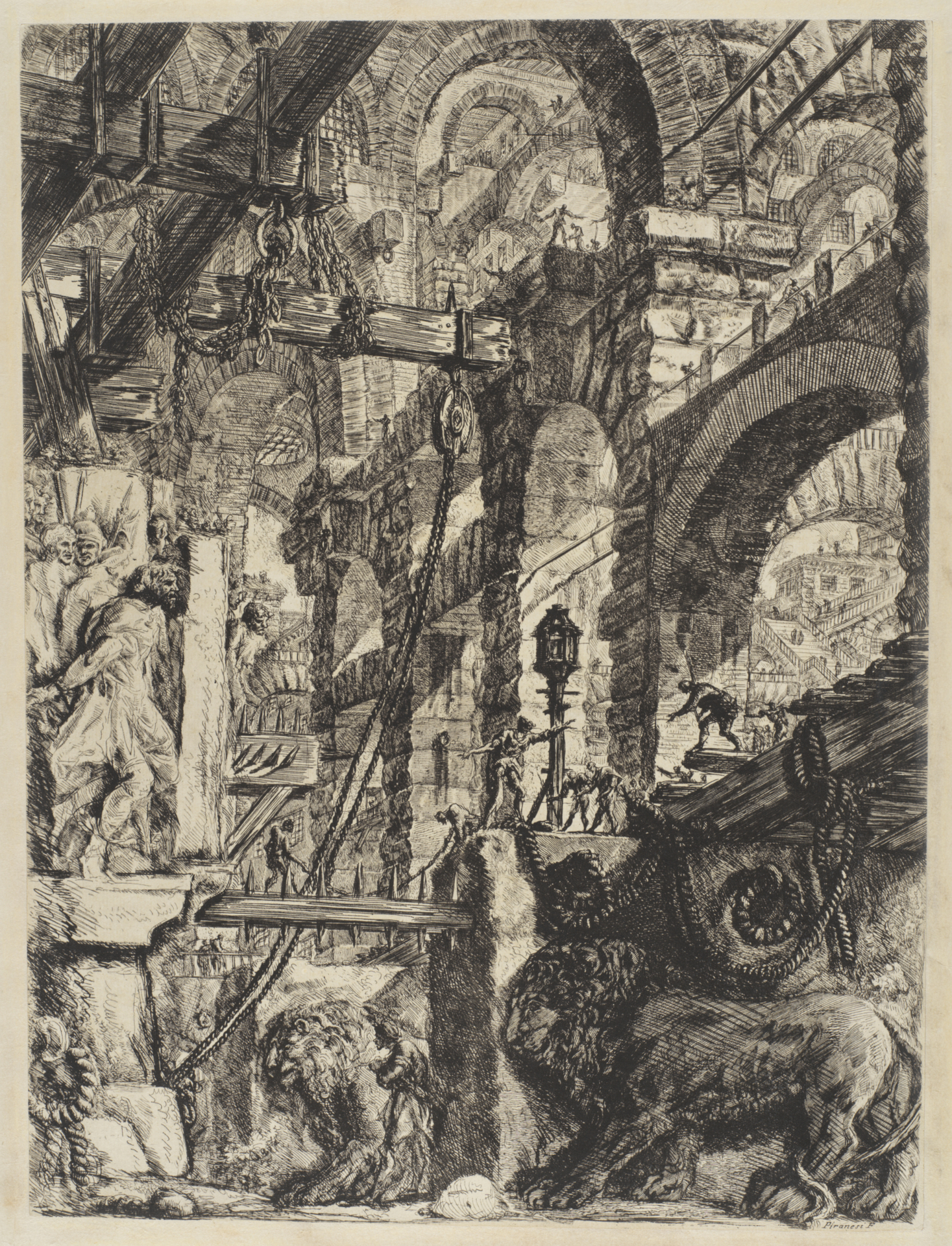
Let’s immerse ourselves in the impressive images of fantasy architectures in Rome. Begin with the overall scene and then look at the details – the innumerable arches with their thick walls, massive beams set at alarming heights and wound round with chains and ropes, and down below, the magnificent lion reliefs in the foreground.
Expert in imaginative spaces
The artist Giovanni Battista Piranesi was a master printmaker and renowned exponent of architectural drawing. In the 18th century, he made his name, above all, with the series of detailed and dramatic scenes in his Carceri d’invenzione – often translated as ‘Imaginary Prisons’. The 16 nightmarish scenes of prisons are numbered among the most famous etchings in art history.
There’s so much to discover!
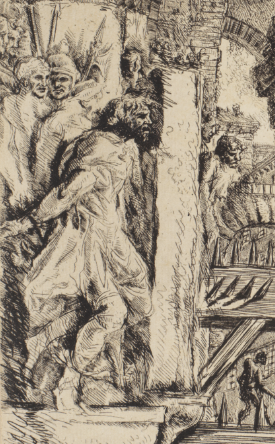
The monumental arches in shadow – masterfully created using closely set rows of etched lines – seem to draw our eyes irresistibly into the intricate and complex scenery. On the left-hand edge, a chained prisoner is depicted in a relief.
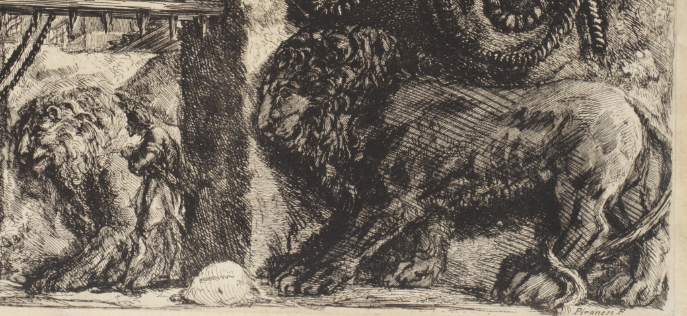
In this little motif, Piranesi succinctly states the theme of the entire sheet – imprisonment. Interestingly, despite emphasising this sombre topic, the relief is the brightest part of the composition. The foreground is dominated by two massive lion reliefs which Piranesi models in different tonal values.
If you look closely, you’ll notice a sculptor working with his hammer and chisel on the lion at the back – an art work in an art work. At many places across the print, little figures are balancing on boards and beams.
Piranesi’s oeuvre reflects, on the one hand, his considerable interest in ancient Roman architecture and, on the other, his delight in his vivid flights of imagination. This print invites you to pause and ponder: What is the relationship between imprisonment and power – embodied in the image of the lions? Did Piranesi see life as a form of captivity, possibly labyrinthine?
Impressive and mysterious, Piranesi’s Carceri prints awaken feelings of ambivalence.