November Vibes through the Studio Window
0:00
0:00
Arthistorian: Hello – and a very warm welcome to the Kunsthalle! I am your guide to the exhibition – and very happy to answer your questions about the works on show.
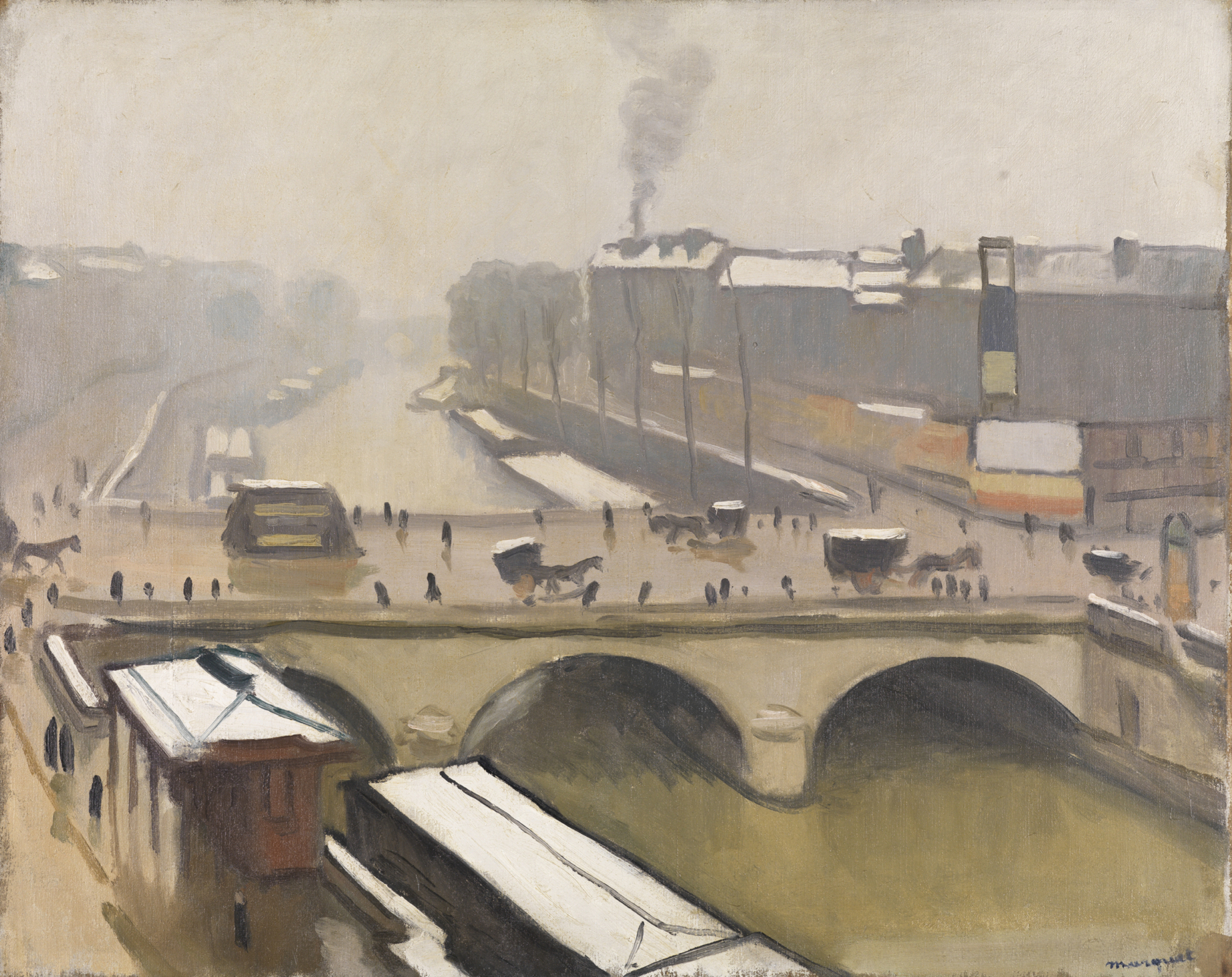
Visitor: Thanks! I do have a question. I’m interested in this painting by Albert Marquet: View of the Pont Saint-Michel in Paris.
Arthistorian: Are you familiar with the artist?
Visitor: A little bit, but primarily I know the bridge.
Arthistorian: Marquet was a friend of Henri Matisse – and even painted this work in Matisse’s studio. Born in Bordeaux in 1875, Marquet studied for four years together with Matisse at the famous Paris art college, the École des Beaux-Arts. They were lifelong friends – and co-founders of Fauvism.
Visitor: Fauvism – I’ve heard the word before … but …. exactly what sort of art movement was it?
Arthistorian: Fauvism dates from the early 1900s. These artists typically use an expressive brushstroke, applying vivid bright colours no longer associated with the real object they depict. Their name, the Fauves, means the ‘wild beasts’. It was used to describe these artists during their show at the Salon d’Automne in 1905. At that time, figures such as André Derain or Maurice de Vlaminck were also exhibiting alongside Marquet.
Visitor: Well, he obviously ran out of bright colours for this work! This is not a Fauvist painting, right?
Arthistorian: In fact, it’s rather atypical. In this View of the Pont Saint-Michel in Paris from 1912, Marquet uses a far calmer and very earthy palette. The grey tones capture the mood of a cold winter’s day with the sky hung with clouds. Only a few people and carriages are visible crossing the bridge. The scene appears almost as if it were frozen – a homage to life in the metropolis in the stillness of winter.
Visitor: The picture seems constructed, rather as though individual elements were simply set adjacent to each other.
Arthistorian: That’s right. Marquet was renowned for his reduced, flat style of painting. Although he avoided details, he still created very incisive, atmospheric scenes. The light in this painting is extremely sparse – the Pont Neuf bridge in the background is hazy, almost as if seen in a fog.
Visitor: Interesting. When I was staying in Paris, I often crossed this bridge. My hotel was nearby, and the bridge connects the Boulevard Saint-Michel with the Île de la Cité. Incidentally, the hotel’s breakfast room had a wonderful reproduction of a 15th-century picture showing the bridge and, pointing downwards from heaven, the hand of God set between the bridge and Notre Dame. Could it have come from an illustrated book?
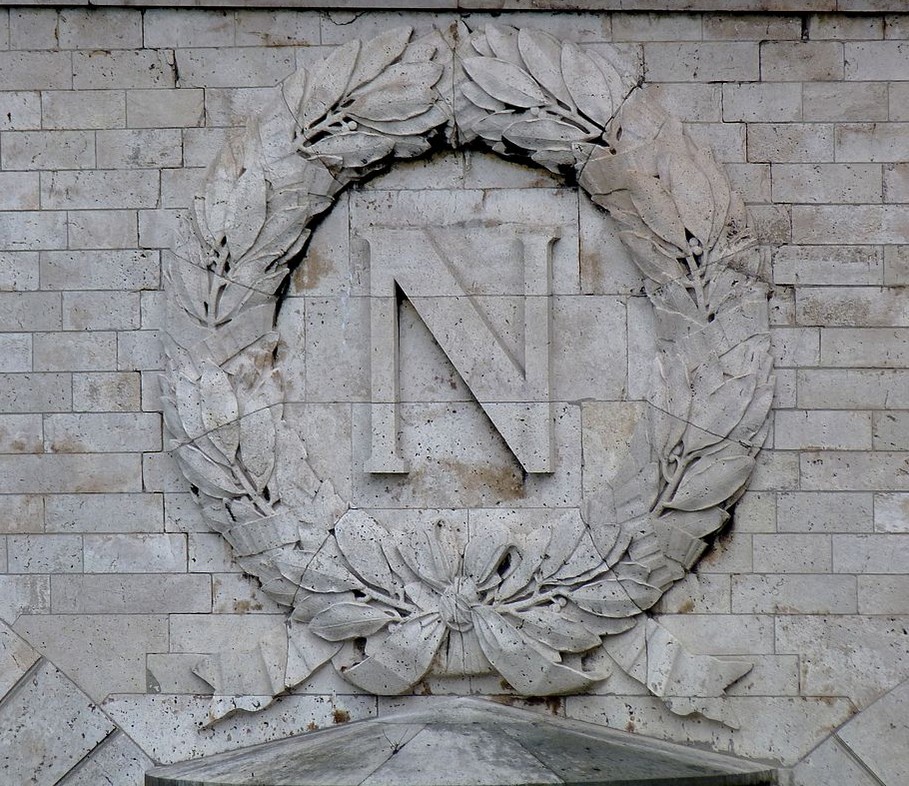
Arthistorian: I know the book you mean. The Hours of Étienne Chevalier illustrated by Jean Fouquet, a personal prayer book dating from 1452 to 1460. The first bridge on the Pont Saint Michel site was even older, constructed in 1378. Due to weather damage, the bridge was repaired and refurbished several times. In 1857, it was demolished and a new bridge constructed, and that’s the bridge in Marquet’s painting. The Pont Saint-Michel is named after the nearby chapel of Saint Michel, dedicated to the archangel Michael. The bridge piers are decorated with a ‘N’ for Napoleon III, since it was built under his reign. Nearly 50 years after Marquet painted this scene, the bridge became the prominent site of a very sad event. In 1961, during the Algerian War, a peaceful protest calling for an independent Algeria was held in Paris. But the situation escalated when orders given by the head of the Parisian police caused a public outcry. It led to riots, and several hundred demonstrators died in street fighting around the Pont Saint-Michel.
Visitor: That’s terrible. I didn’t know that. Thanks for your insights into the picture! Do you still have time? Could I ask you about a few other works?
Arthistorian: With pleasure! That’s what I’m here for.