


Reconstruction Measures in Paris
0:00
0:00
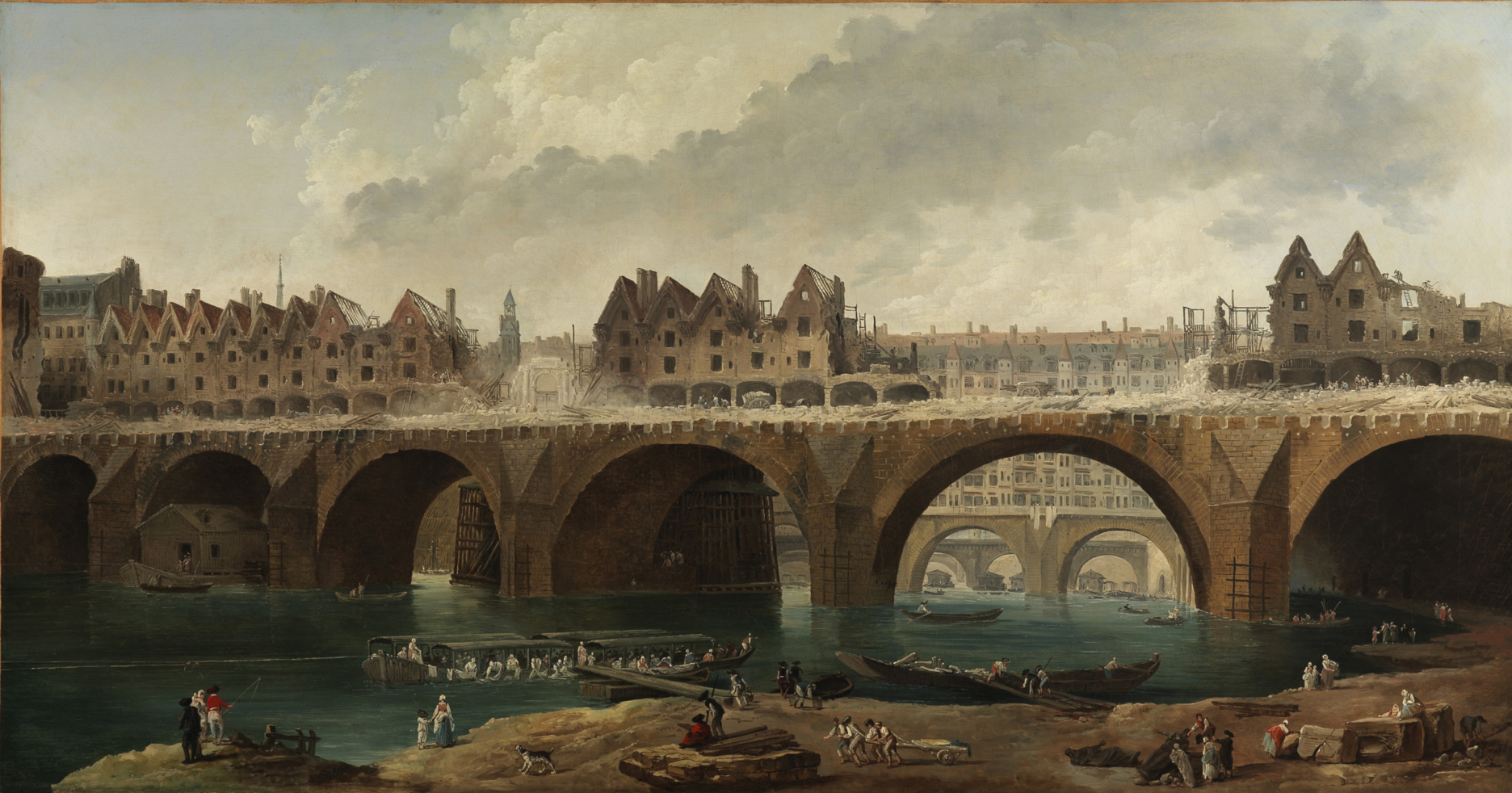
This picture of houses being demolished on the Notre-Dame bridge appears truly spectacular. French artist Hubert Robert shows us a pile of ruins where, a short time before, there were still houses, and life and trade flourished.
Clouds of dust rise between the rubble, almost entirely obscuring the demolition crews. The figures in the foreground now hardly seem aware of the work on the bridge – in contrast to us as we look at the picture.
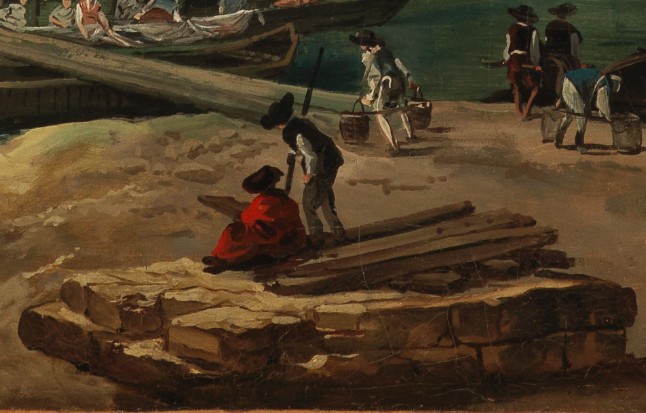
On the River Seine, women in a laundry boat are busily washing clothes; other people along the shore are also going about their daily business. A mother with her child are gazing at the river, men are pulling a cart laden with a heavy stone, and a group on the riverbank are discussing the statues on the ground which, shortly before, were probably still part of the bridge. A man is fishing while an artist in a red robe is sitting on a pile of stones, evidently capturing the scene – Hubert Robert’s self-portrait of the artist.
In fact, he was well versed in combining architectural scenes and genre painting.
Interest in the traces of the past
Born in Paris in 1733, Robert moved to Rome in 1754. He lived there for eleven years, studying at the Académie de France. His works were so influenced by the ruins of classical Rome that, on his return to Paris, he was nicknamed ‚Robert of the ruins‘. Nonetheless, with such paintings as this scene of houses demolished on the Notre-Dame bridge, he also created a historical record of his day.
Essential transformation of a growing city
Paris’s 16th-century bridges were demolished for many reasons – not just due to their statics, but in particular in response to the alarming hygienic conditions on and under them.
This painting documents the start of the transformation of Paris – converting a medieval city into one of Europe’s most modern metropolises.
In that sense, Robert reversed the normal message of a landscape with ruins: while ruins in his Italian pictures testify to the former glory of antiquity, here they symbolise the future and the eve of a new age.