


Showing. An audio tour through Baden-Württemberg for the collection of the Staatliche Kunsthalle Karlsruhe
Karin Sander
Art History With or Without Names
0:00
0:00
On the curtain in the atrium, on every museum label, on the wall of the following room — names are omnipresent in this exhibition. What do they trigger, what do they suggest?
Names and Works
Have you looked at the Rembrandt? What did you feel when you stood in front of the Dürer? Which Rodin did you like best?
If you didn’t puzzle over these questions, you’re obviously no stranger to art-world-speak. If you did: congratulations, because you probably think carefully about what others say heedlessly without hesitation. Either way: This is the right moment for all of us to think about the connection between names and works.

The World behind the Names
Names provide the entrée to this presentation of the collection, so it is only logical that they also determine its conclusion. What came into your mind when you read the names on the curtain of the atrium? Did you have images in mind? Vague memories of a style or certain motifs? Or even specific works? But surely some of the names didn’t trigger anything at all, because the selection deliberately avoids the classic, male-dominated list of great names as represented by Schwanthaler’s figures of artists, for example.
You have gone a step further, looked behind the curtain, and matched your inner images called up by the names mentioned with the real ones. Museum labels, with a name first, no doubt often served you as an aid for orientation and identification. And perhaps the introductory questions about the names called to mind again the images just consolidated.
Seeing, Hearing, Imagining
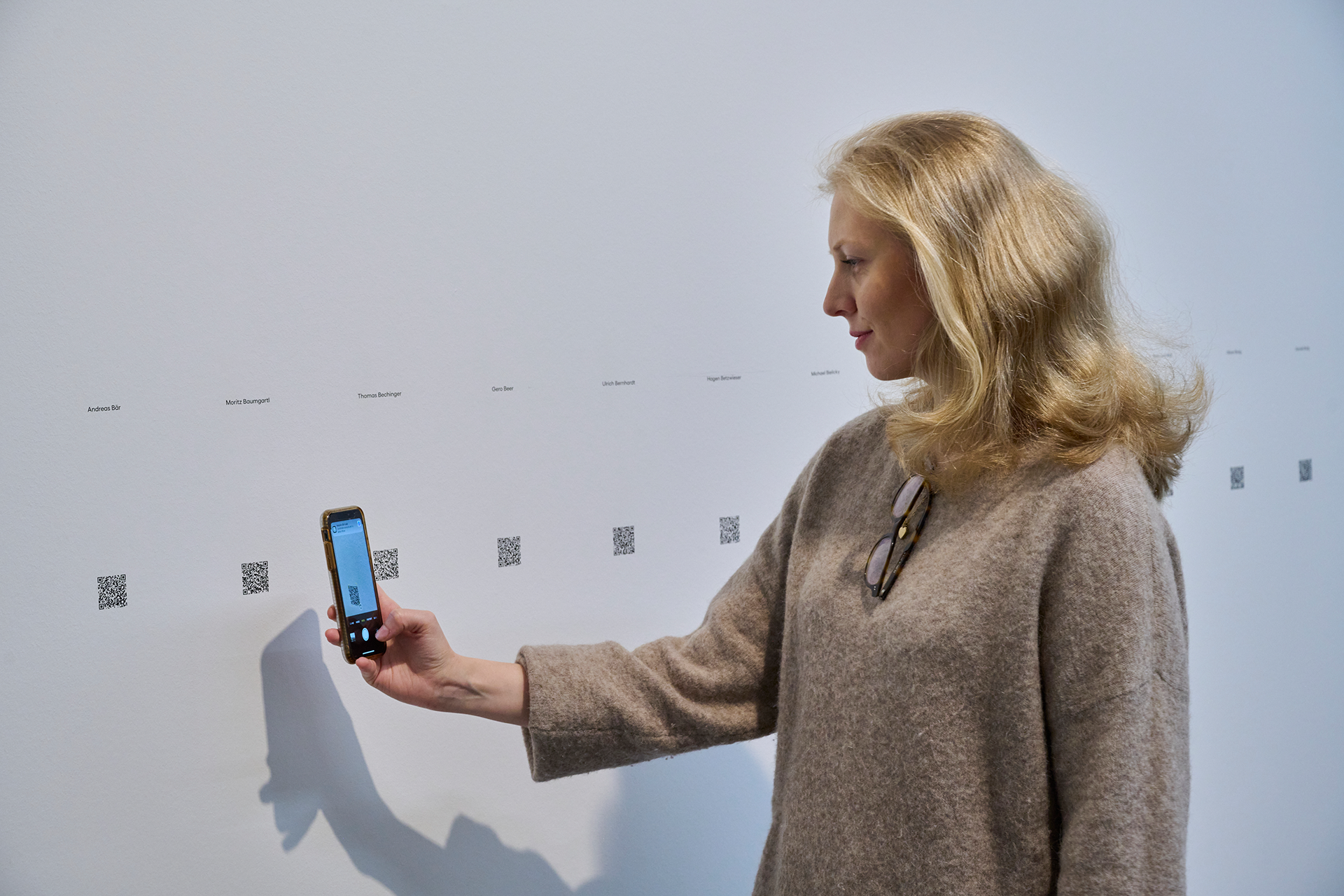
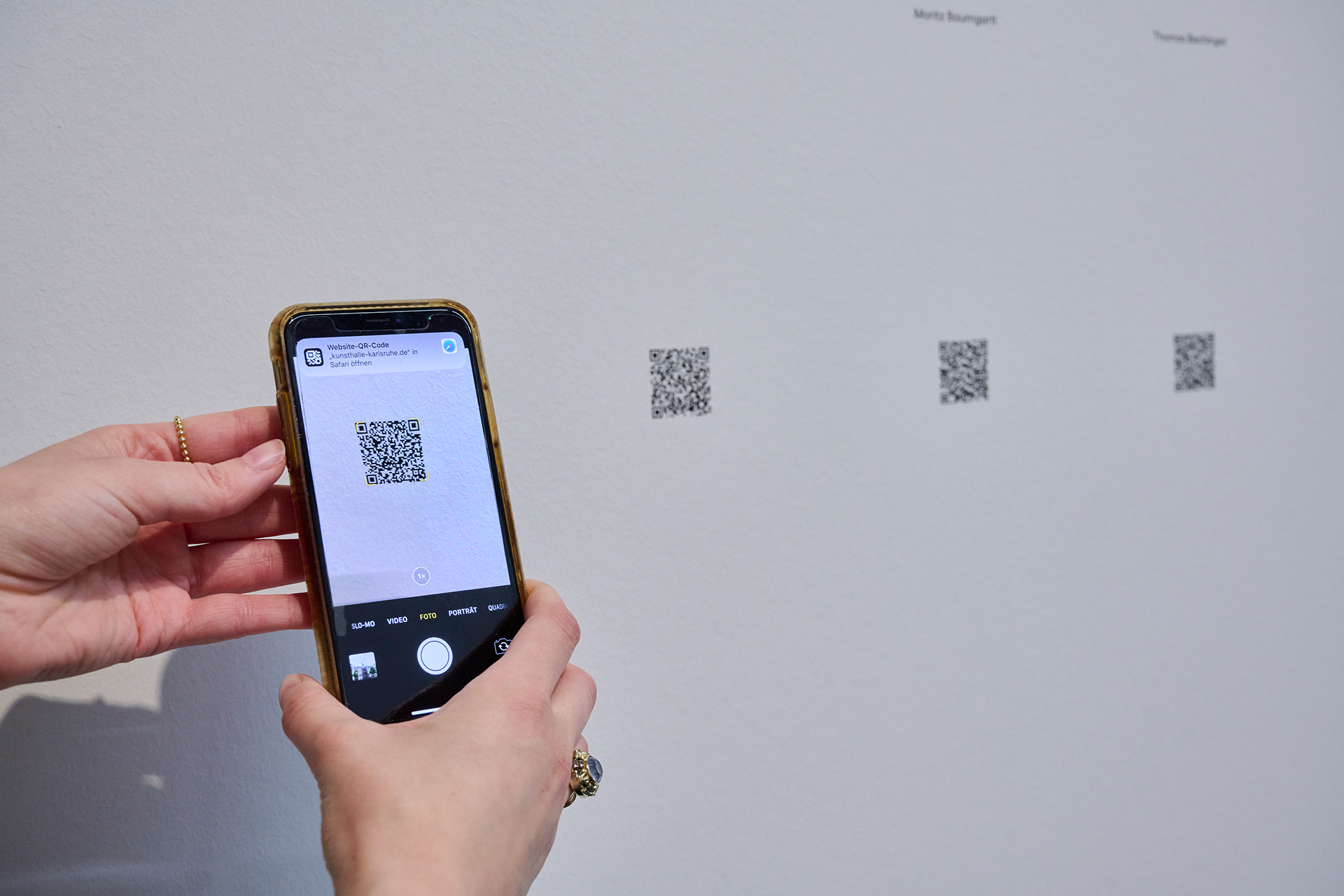
Now, however, you are standing in front of a work that, visually, consists of nothing but names. They belong to artists from Baden-Württemberg and invite you in a second step to discover their works purely acoustically. So again there is a kind of curtain that inserts itself between you and the works — a curtain of Not Seeing. The artworks are only present in words; they emerge in the imagination of the viewer or, rather, the listener. Showing/Pointing is the name of the work. Showing/Pointing not with the finger, but with the voice. But also showing/pointing out behavioral patterns, patterns of a traditional museum visit: Aren’t you in the process of having things shown to you on this tour? Perceiving the works through words?
The audio contributions in Karin Sander’s work, the emphases and the formulations are as individual as an artwork, its artist’s signature and intention. They skillfully reflect on the concept of using a single name as a proxy for a person’s oeuvre.
Dates and facts
| Title | Showing. An audio tour through Baden-Württemberg for the collection of the Staatliche Kunsthalle Karlsruhe |
|---|---|
| Artist | Karin Sander |
| Date | 2012 |
| Material | Audioguides |
The Orangerie will remain closed through September 25 due to exhibition renovation work. Starting September 26, we look forward to welcoming you there to our new special exhibition, “Nicolas Daubanes. Le feu intérieur.”
Your visit